 Civilnet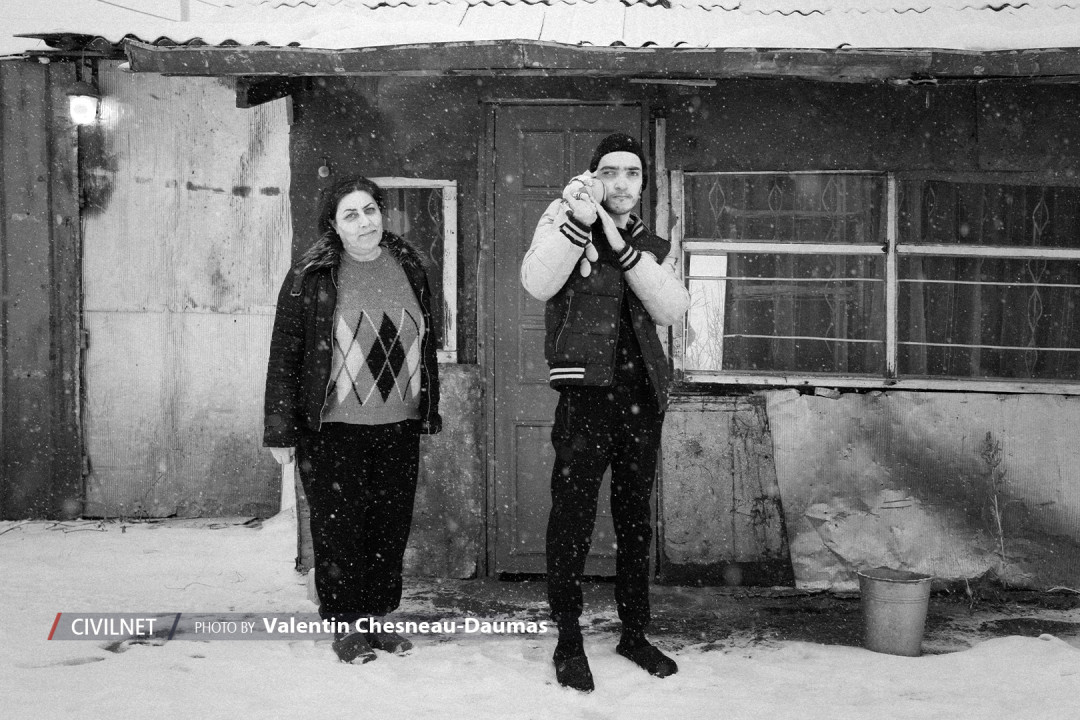
By Valentin Chesneau-Daumas
Out of respect for privacy, last names have been intentionally omitted.
At precisely 11:41 a.m. on December 7, 1988, a 20-kilometer-long fault line opened up, causing an earthquake that was felt from Georgia to the Iranian border. Armenia’s Shirak region was struck by two earthquakes within minutes of each other.
A scar that never healed
When the earthquake struck, Samvel was with his family in an apartment in the center of Gyumri - Shirak’s regional capital. Miraculously, all 10 of them escaped unharmed, but when he emerged outside, no buildings were left standing. The Gyumretsi had all lost a mother, father, grandmother, or brother.
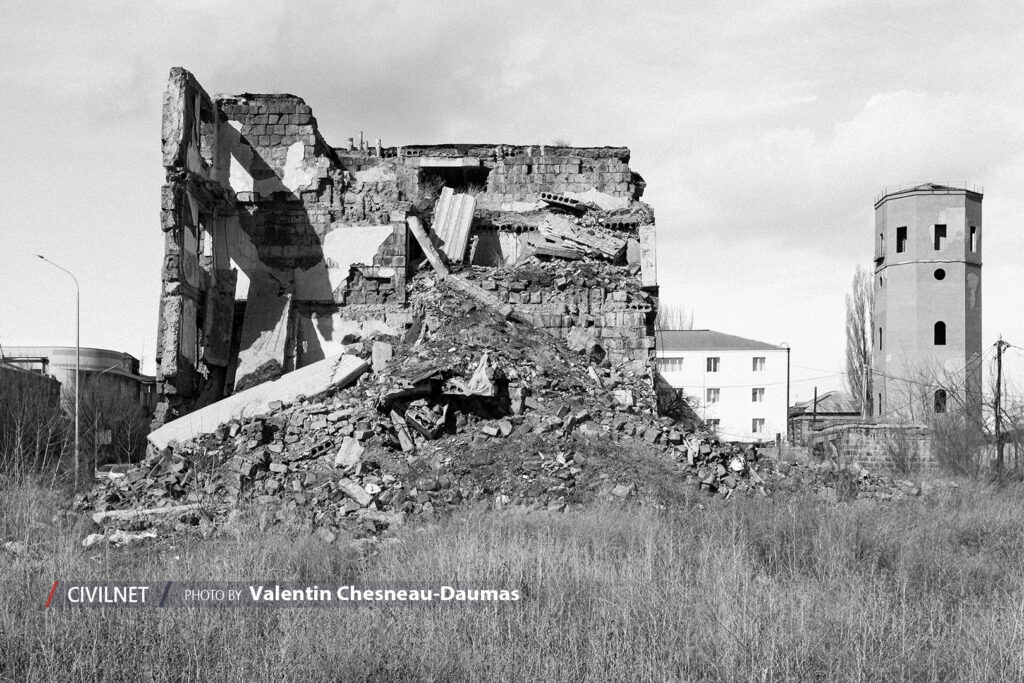
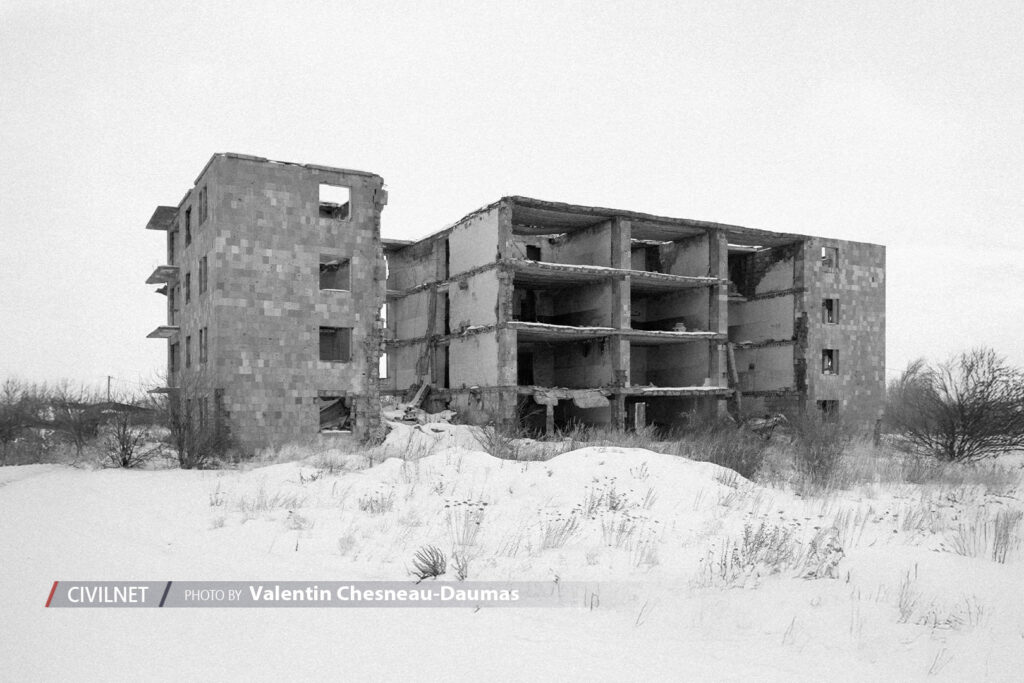
Collapsed buildings in Gyumri
The two seismic waves, one powerful and the other moderate, measuring 6.9 and 5.8 on the Richter scale respectively, reduced Gyumri, Spitak, and all the villages in northwestern Armenia to piles of rubble and open-air cemeteries.
“I have never stopped painting since I was five years old. In the months following the disaster, I felt empty. I saw only darkness. I tried to sketch, but nothing appeared on the canvas. It was the only period in my long life when I did not paint.” recounts Samvel, a septuagenarian painter who lives with his wife in a “domik”, a small structure made from metal containers that were originally used to transport humanitarian aid.
His house is located on the outskirts of present-day Gyumri, in the heart of the university district, which was brand new in 1988 and symbolized the city’s prosperous future. Today, all that remains are a few ruins scattered among vacant lots. In Armenia's second largest city, nearly half of the population (43%) lives below the national poverty line (2023). At its peak, the city had a population of nearly 230,000. According to the latest figures, there are now only 110,000 inhabitants, and this number is steadily declining.
Samvel and his wife are among the 500,000 people who found themselves homeless, survivors of a disaster that claimed 25,000 to 50,000 lives. On that day, the fault line opened up just a few meters below the surface, in a neighborhood inherited from Soviet urban planning and built with poor-quality materials. At 11:41 a.m., most residents were at work, children were at school, and seniors were gathering to pass the time. It took just one minute for calm to descend into chaos. The disaster left a gaping wound in the region that remains to this day. Samvel and his wife still live in the same “domik”, 38 years later.
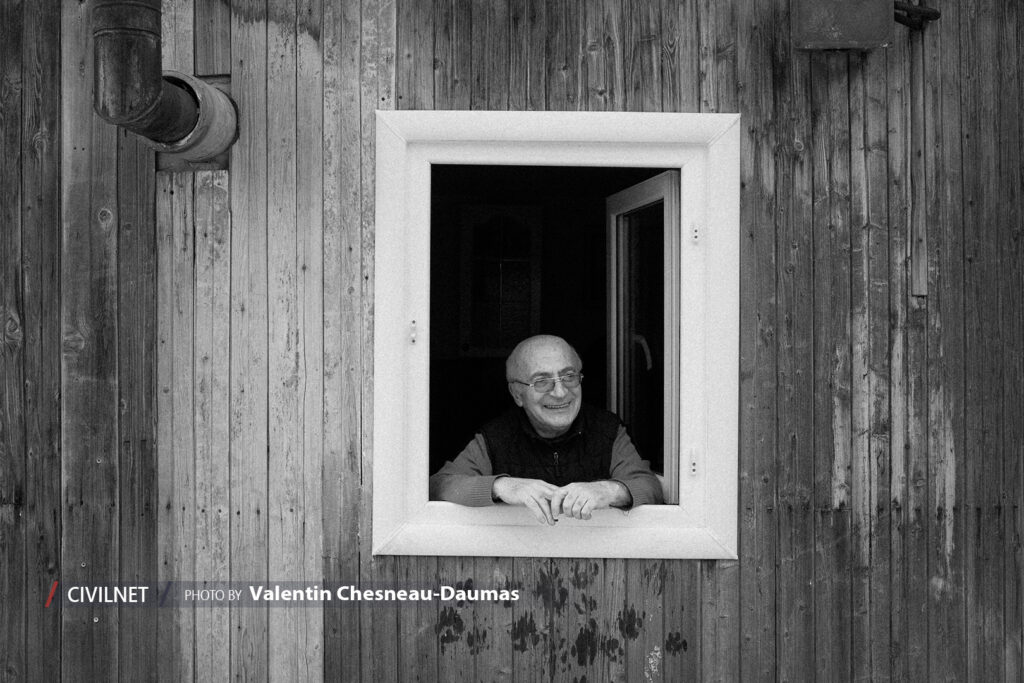
Samvel, the painter, has been living in a “domik” in Gyumri for over 30 years
Humanitarian containers turned into permanent homes
When then-Soviet leader Mikhail Gorbachev heard the news, he immediately returned to Moscow from a trip to the U.S. and asked the international community for help. Many countries responded and sent large quantities of food and equipment in metal containers, an unprecedented show of international solidarity. When the USSR collapsed barely two years later, taking with it all the financial support and projects initiated to rebuild the region, the hopes of many Armenians vanished into thin air.
The newly independent Armenia became responsible for addressing the lack of stable housing for the survivors, in addition to dealing with severe energy shortages and economic hardship.
"Following the wave of support from abroad, I received an offer from Poland to come and live in the country with my family. I was even offered a studio so that I could continue painting. The situation in Gyumri was terrible, and the city lacked the manpower to orchestrate the reconstruction. But I was forbidden to leave the country by local authorities and my visa was torn up in front of my eyes. I therefore moved into a “domik” on a temporary basis. That's what I thought at the time", continues Samvel.
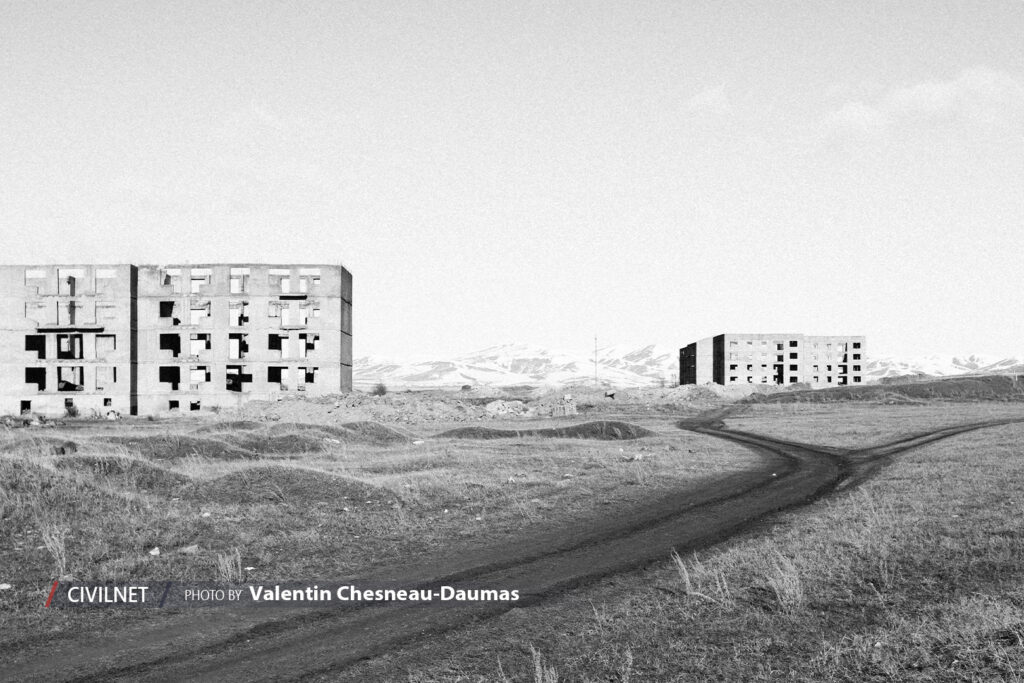
A neighborhood in northern Gyumri, which began to be rebuilt but was then abandoned after the collapse of the USSR
The population organized itself with the means available. The containers that had transported the aid were converted into temporary housing. Assemblies of several containers, window openings, and basic electrical installations created a habitat unique in the world. The “domiks,” from the Russian word for “little houses,” were born.
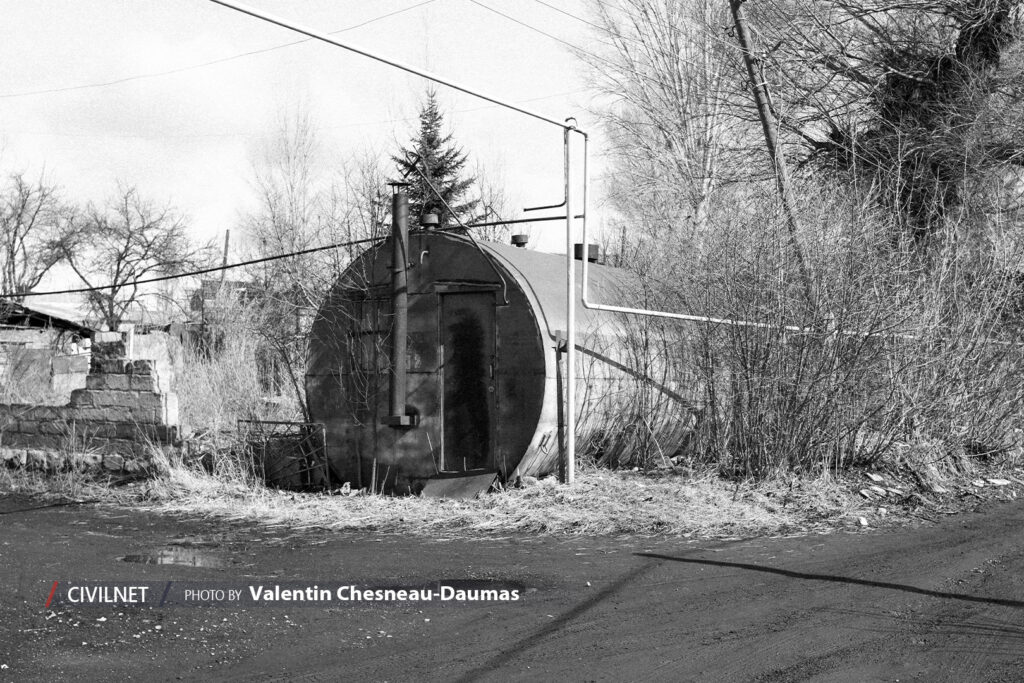
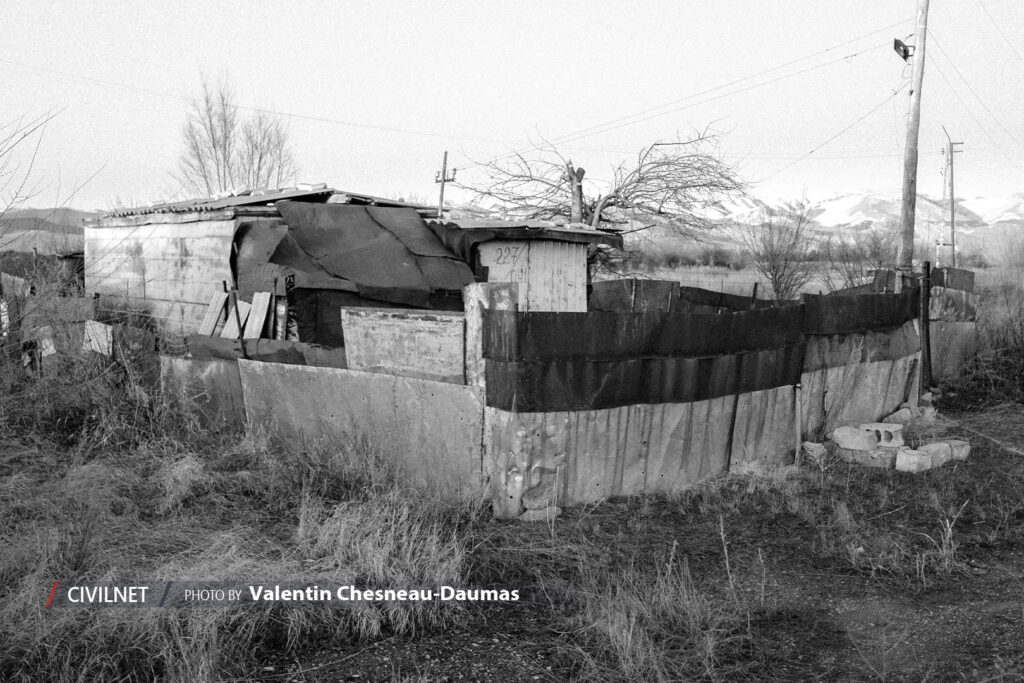
“Domiks” in Gyumri
It is now 2026 and the city center of Gyumri has been beautifully rebuilt, taking care to leave traces of undeniable melancholy, such as the collapsed bell tower of Saint Saviour's Church, sadly displayed like a relic at the foot of the brand-new monument. However, when one moves a few hundred meters away from the city center, a completely different scene emerges, dotted with ruins and roads resembling muddy paths. It is here that most of the nearly 3,000 poorest families still live in makeshift shelters.
Sevak's house is located behind the bus station. His wife is a cook, his daughter is continuing her studies, and his son “served in the republic's army as a soldier,” he says proudly. He left for military service at the age of 18, initially for the mandatory two years, but only recently returned after a decade of service. He is now planning to leave for Europe, to possibly find employment there.
Sevak works in construction, but only in the summer; in the winter, work is scarce. After the earthquake, he settled in this Gyumri neighborhood, on his native land. He couldn't see any other way. He admits that he feels sad when he sees the precarious situation his family is enduring. None of the requests for regularization they have made so far have been granted by the government. They do not own the plot of land on which they live, only the walls. Very recently, after years of waiting, a letter arrived offering Sevak the opportunity to buy the plot of land and make the address official.
“The price is ridiculously high”, he says. Nearly 2,250,000 drams (€5,000), so it won't be happening anytime soon.
Their situation is relatively rare (fewer than 500 cases in nearly 40 years, according to local NGOs such as Shirak Center) because the family has transformed the dwelling from uninsulated metal walls into a more comfortable and sustainable home. The government therefore considers that they have the right to continue living there. Sevak's situation is exceptional because most of the households living in these iron “domiks” are among the most disadvantaged and vulnerable members of the population: the elderly.
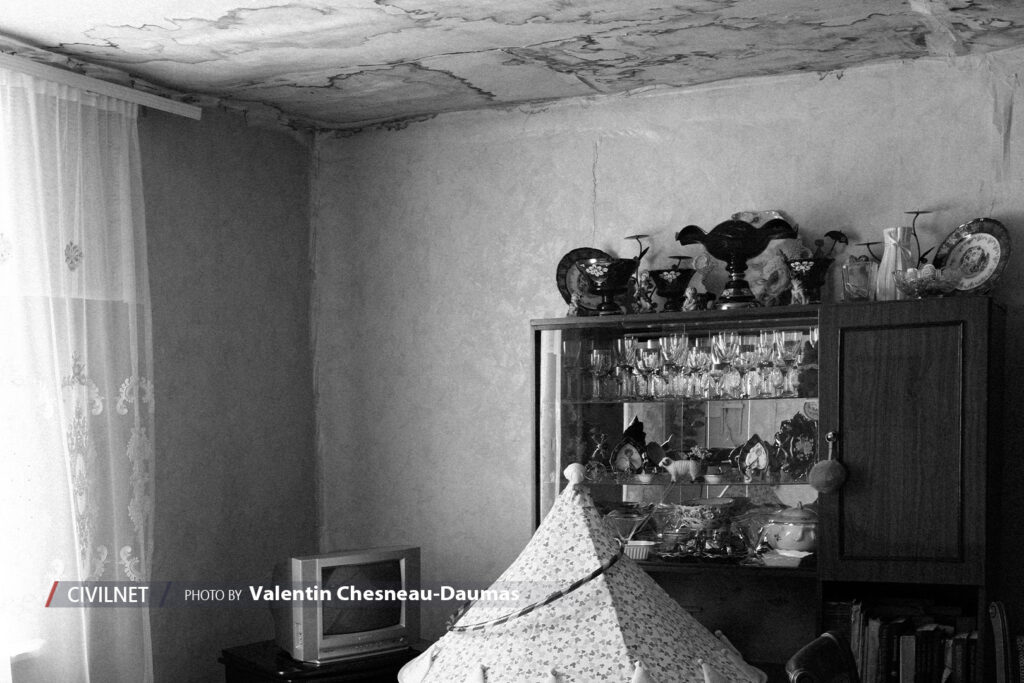
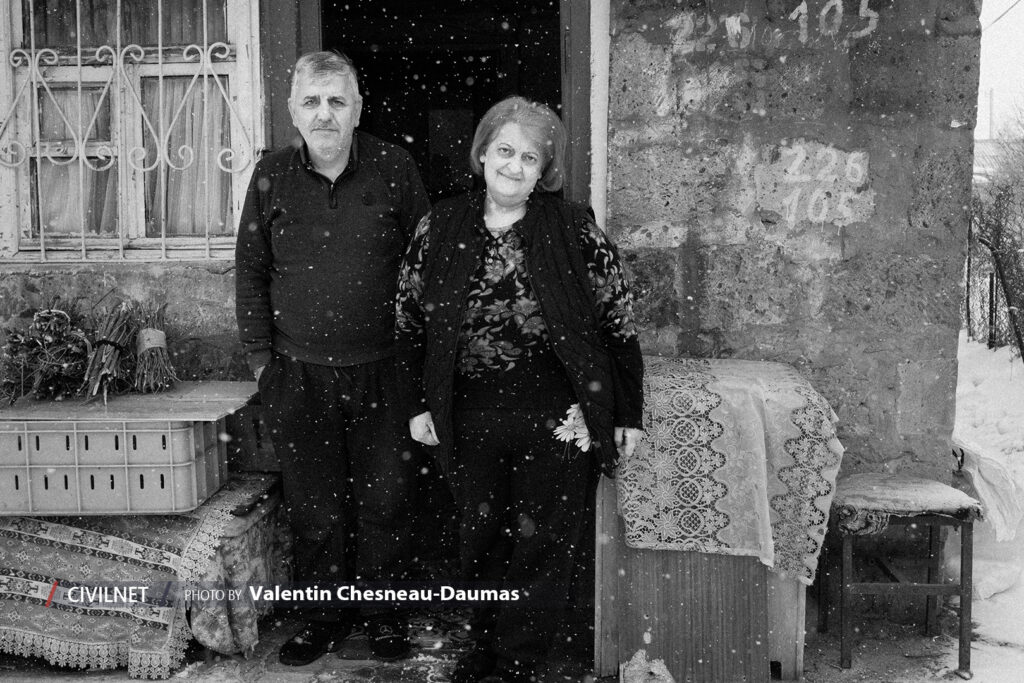
Inside a flooded “domik” / Samvel and Nasik outside their house in Gyumri
The impasse of public policy
On the sad 30th anniversary of the earthquake in 2018, Armenia's official news agency Armenpress reported that 66,400 refugee families had been rehoused thanks to “various programs.” However, the government qualified this figure by stating that 542 of these families remain homeless. According to Tania Arzoumanian, then head of the department for the management of municipal housing and infrastructure funds at the Armenian Urban Construction Committee, the situation was expected to be resolved by 2020.
But things clearly haven't improved, because in 2021 Nikol Pashinyan's government published its official program for the period 2021-2026. In the section dedicated to territorial development, we read that “the government plans to continue the process of rehabilitating families living in temporary structures erected after the earthquake (1988), demolishing these structures, and restoring the urban environment of the territories.” Beyond these rather vague claims, it was not until October 13. In 2022, the government published Article 1601-N, which stipulates the dismantling of “non-permanent structures” on state-owned land (as a reminder, most residents own the buildings but not the land, which is owned by the state or the city of Gyumri), and to rehouse families on a permanent basis. Obviously, any household not registered with the municipality at that time would not benefit from this vast program. To prevent the problem from being displaced, it is specified that any family attempting to rebuild a temporary structure on another public plot of land after the demolition of their own will be evicted within five days.
Rather than rebuilding itself, Nikol Pashinyan's government provides a certificate of housing, which is nothing more than a debt security, with a value calculated according to family criteria and guaranteed by the state. It is valid on the private market, with a limited duration, and is only issued if the temporary dwelling has been completely destroyed, with supporting evidence. These conditions are particularly strict but ensure that families do not return to their “domiks” after using the certificate to buy and then resell an apartment, as has been seen in rare cases in the past. However, accurate and official statistics are difficult to obtain because the situation of “domik” residents is now mixed in reports with that of displaced persons from Artsakh.
NGOs working on a daily basis
One only needs to walk around Gyumri to realize that in 2026, the situation is far from under control. At the intersection of a muddy street, a woman sweeps in front of her house. Armenouhi lives with her husband, daughter, son, and five grandchildren in a home built from several shipping containers. The small two-bedroom, one-living room shack is a hive of activity. It is still early, and everyone is getting ready in a very organized flurry of activity. Every little space has its purpose.
Armenouhi explains that life here is hard and the winters are freezing. Outside, large snowflakes are falling, and the thermometer reads -18°C. The stove in the center of the room is only heated during the day to save as much energy as possible. When winter is long, the bill can rise to nearly €450 for wood.
“Before, there was assistance for families with children, but now we have to fend for ourselves. For the past two years, there has been nothing. The government asks us to work, but what's the point when we only earn €7?” She explains that the “domiks” closest to the iconic Iron Fountain, which stood in the heart of the university district, were recently destroyed in order to make the area more attractive to the few tourists nostalgic for Soviet times. It is a strange paradox and a reflection of the priorities of successive governments, which have done little to restore Gyumri to its former glory.
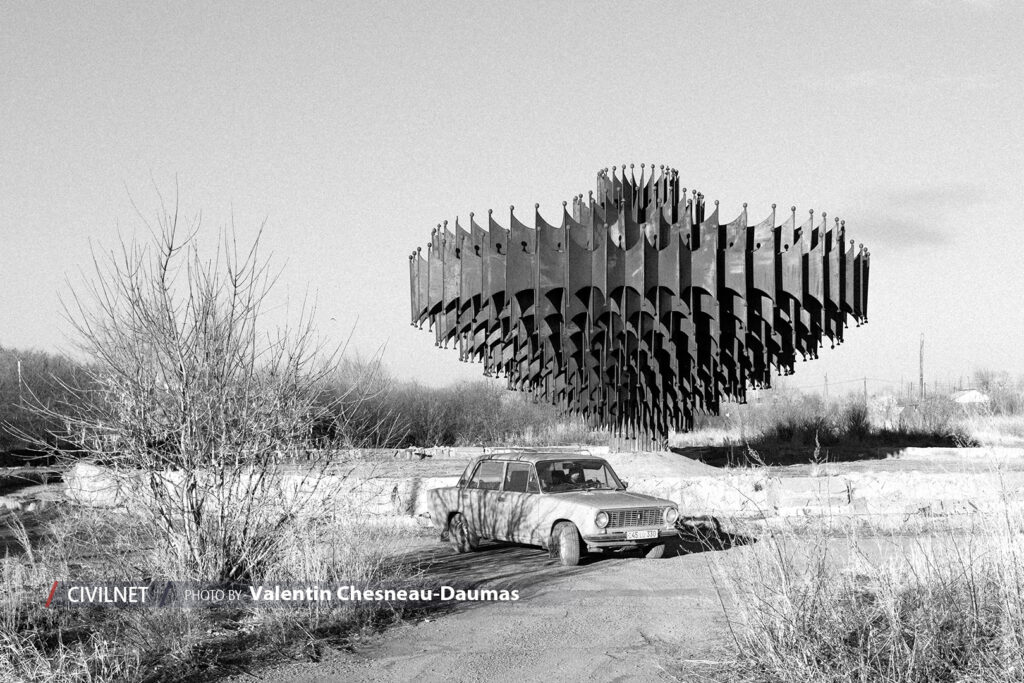
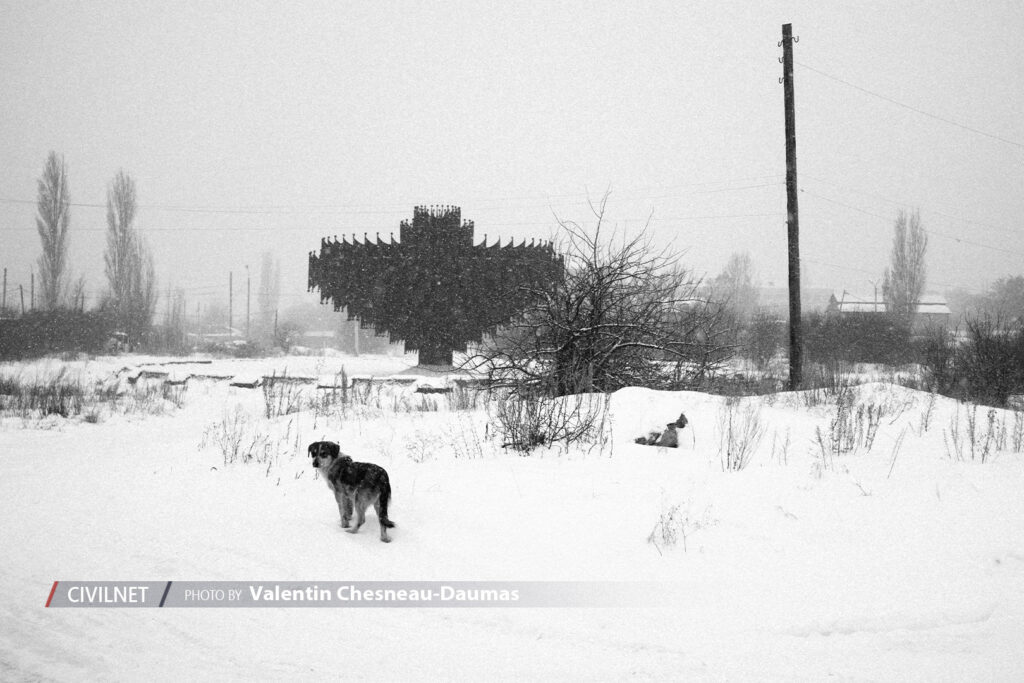
The Symbol of Gyumri , The Iron Fontain
The Shirak Center, an NGO founded by Vahan Tumasyan, has been helping the most disadvantaged earthquake victims for nearly twenty years. Having worked for a government agency responsible for the future of disaster victims, he is clear-eyed. “Apart from collecting statistics on the “domiks”, we didn't do much; we didn't take action. In the twenty years of Shirak Center’s existence, we have lifted 270 families out of poverty. We have bought apartments in the new Mush neighborhood, and for the others, we do our best and distribute firewood in winter, food, clothing, bags, etc. almost daily.”
The NGO's figures show that there are still 2,720 “domiks” in Gyumri, 300 of which are empty and uninhabitable. According to Shirak Center, 3,000 to 4,000 people still live in partially ruined buildings, in extremely difficult conditions, and have been waiting for them to be rehabilitated for nearly four decades. "For example, yesterday we visited people living in a dormitory that has been in poor condition for years. We brought them firewood. These people are not counted among those living in “domiks” because they live in brick houses. But often these are in much worse condition than the “domiks”. There are many families in this situation, and no one talks about it."
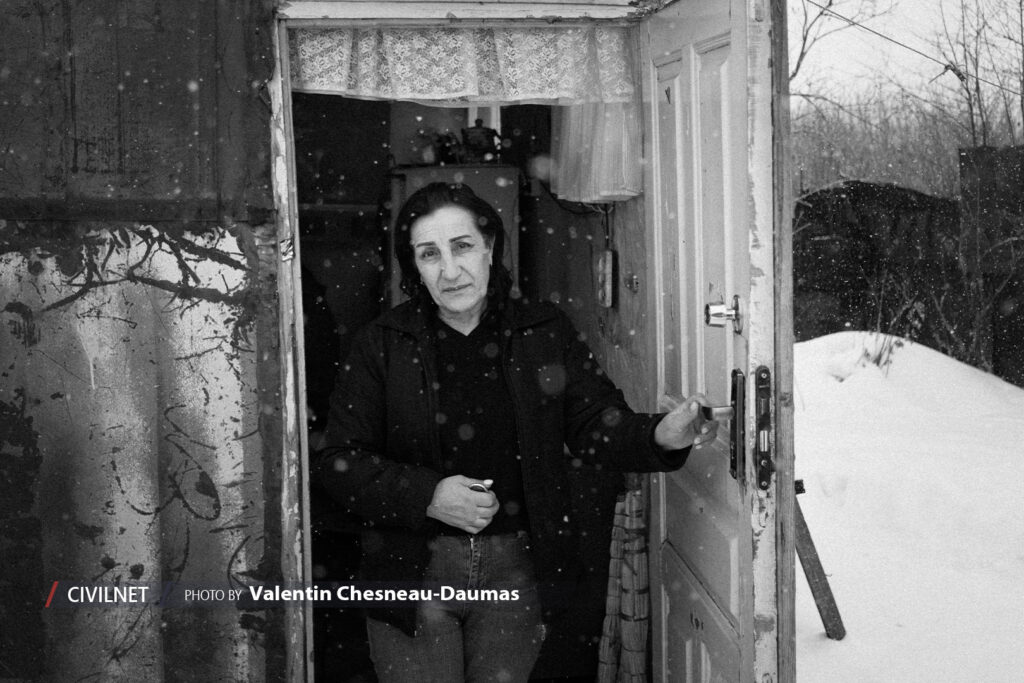
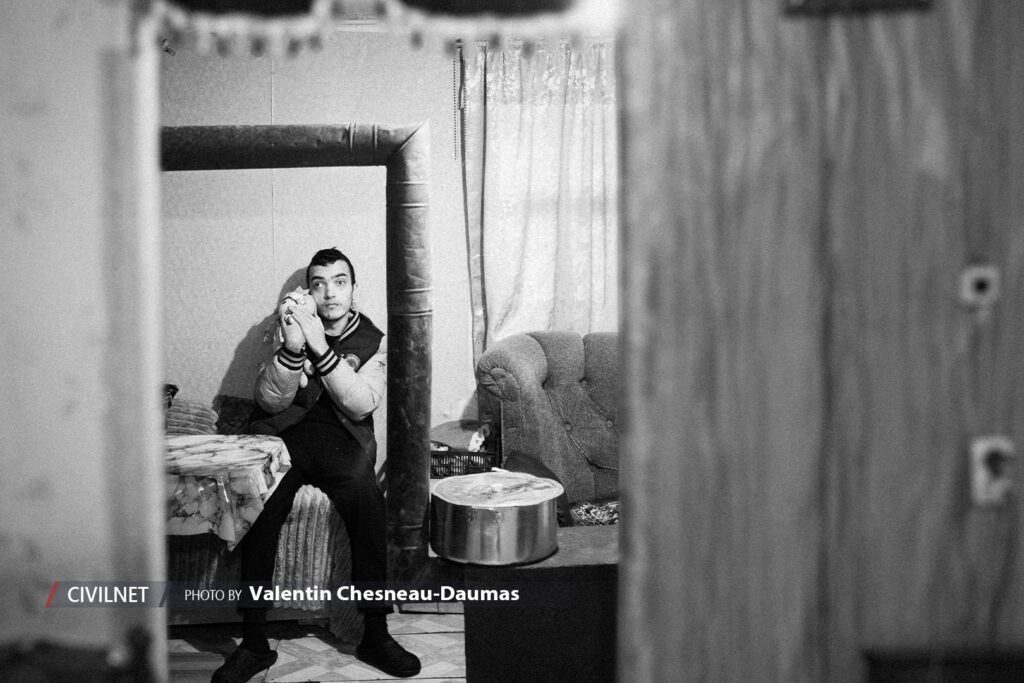
Rita at the top and Jora at the bottom
It is clear that Armenia is still struggling to rehouse a significant number of people, who continue to live in appalling conditions. Despite Nikol Pashinyan's ambitious policy over the last five years, progress remains limited and, with a few exceptions, the situation has changed little. Some NGOs, such as Casa and the Shirak Center, are working to provide solutions, thanks in particular to the generous support of donors from the diaspora, but there is still a long way to go before real stability can be ensured for all those affected by the earthquake.

 Stories