Armenian Genocide Museum director resigns after dispute over Vance visit
 Paul Vartan Sookiasian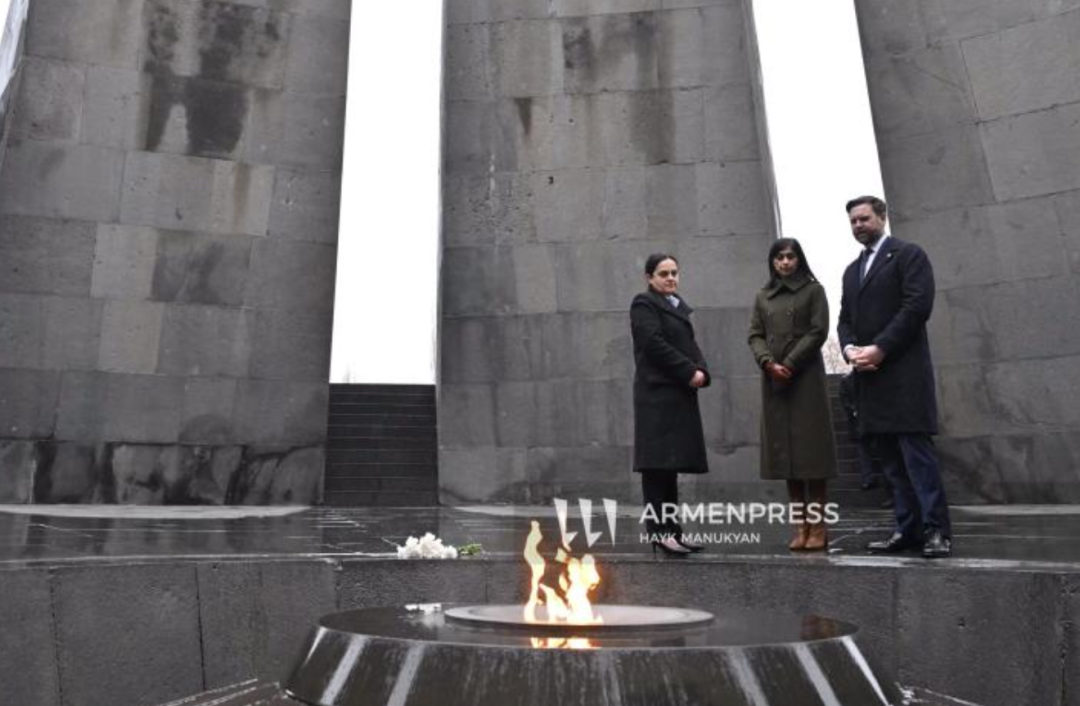
The director of Armenia’s Armenian Genocide Museum-Institute has resigned after a dispute that museum staff link to protocol issues surrounding last month’s visit by U.S. Vice President JD Vance, according to a report by Radio Free Europe/Radio Liberty’s Armenian service, Azatutyun.
Edita Gzoyan left her post this week without public comment and will be temporarily replaced by Hrachya Tashchyan, a diplomat and former aide to Prime Minister Nikol Pashinyan, until a new director is elected.
Museum employees told Azatutyun that Gzoyan had been instructed by Armenia’s education ministry to submit her resignation. In an unprecedented move, all 74 staff members signed a joint appeal to Pashinyan asking him to reverse the decision.
Suren Manukyan, one of the museum’s senior researchers, said staff viewed the decision as contradictory to the government’s stated goal of internationalizing Armenian science, arguing that a highly regarded academic had been removed without consultation.
Officials informally told museum employees that the decision was linked to construction problems at the memorial complex. A controversy emerged late last summer over what staff described as careless work during renovation, including allegations that stones at the site had been removed by breaking them.
Museum staff and scientists rejected that explanation, saying responsibility for the project lay with the education ministry, which announced the tender, selected the contractor and appointed technical supervisors. They said neither Gzoyan nor the museum’s scientific staff had direct authority over the construction work.
Several employees and board members believe pressure on Gzoyan began after Vance’s visit to the memorial complex in February, when she personally guided the U.S. delegation.
According to staff cited by Azatutyun, Gzoyan showed Vance and his wife memorial khachkars dedicated to victims of anti-Armenian violence in Sumgait, Baku and Gandzak in 1988-90, as well as the graves of five Armenian fighters buried at the memorial who were killed in the conflict. During the tour, she explained the history of those killings, spoke about the Karabakh war and presented books on both the conflict and the Armenian genocide.
The visit made international headlines when Vance’s X account posted a message using the term “Armenian Genocide” before quickly deleting it, a move that adhered with the Trump administration’s non-recognition policy, but resulted in significant criticism of Vance.
Meanwhile, staff said the domestic controversy intensified after the museum’s official statement on the visit referred to the region as “Artsakh,” rather than Nagorno-Karabakh, a term the current Armenian government has increasingly avoided in official communication.
Soon after the visit, Pashinyan told parliament that during the vice president’s visit “things happened that would have been better if they had not happened,” without elaborating. According to museum employees, internal discussions about Gzoyan’s future began immediately afterward.
Staff also noted that Gzoyan stopped appearing in regular photo updates published by Education Minister Zhanna Andreasyan from the memorial construction site shortly after the visit.
The ministry has declined public comment, asking the media to submit written questions.
The dispute has also triggered changes in the museum’s governing board. Raymond Kevorkian, a leading historian of the Armenian genocide and author of major works on the subject, resigned as chair of the Board of Trustees, according to museum employees. Several other board members also stepped down.
Kevorkian, long regarded as one of the most prominent international scholars of Armenian genocide studies, had chaired the board during a period when the museum sought to strengthen its global academic profile and international partnerships.
On Friday, Pashinyan appointed new members to the museum’s 15-member board.
The Armenian Genocide Museum-Institute oversees one of Armenia’s most symbolically important memorial sites, visited each year by foreign delegations, heads of state and international scholars.

 Stories