Pashinyan calls EU–Georgia rift ‘biggest problem’ for Armenia’s European integration
 Alexander Pracht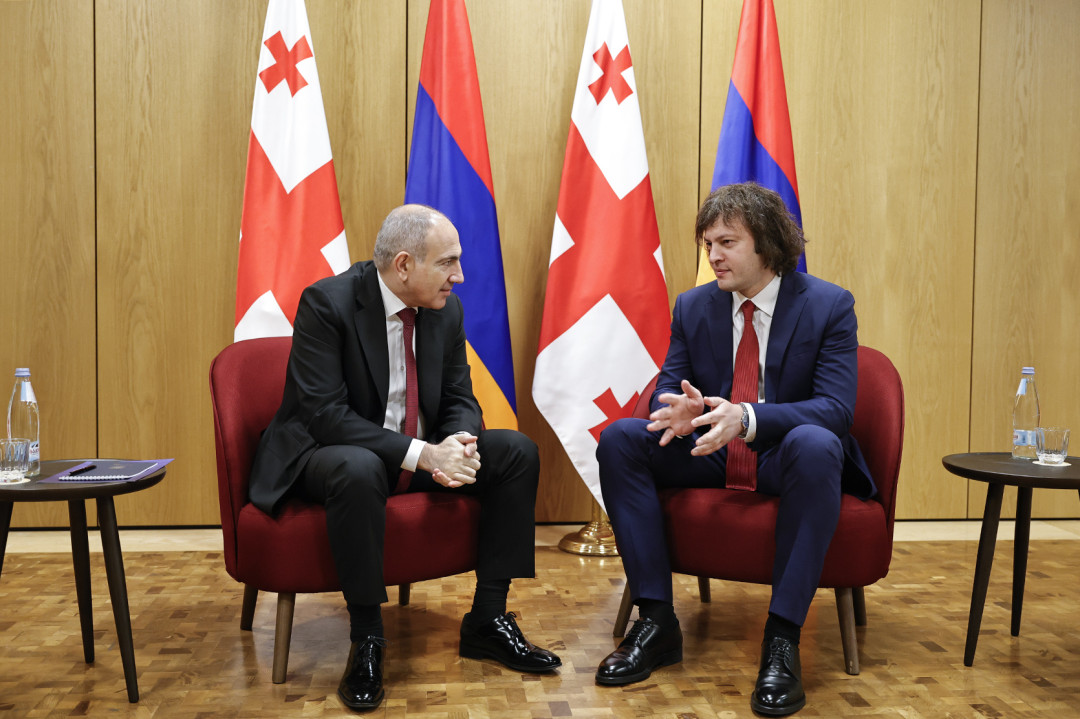
Armenian Prime Minister Nikol Pashinyan believes that the breakdown of political dialogue between Georgia and the European Union poses a serious challenge for Armenia’s integration with the bloc. He made the remarks in a speech before the European Parliament on Wednesday.
“I have to say frankly that the biggest problem on Armenia’s EU integration path at the moment is the suspension of political dialogue between the EU and Georgia. For us, Georgia is a link to the European Union,” Pashinyan said. “We would very much desire that this constructive dialogue resume. It is just as important for Armenia as for Georgia.”
Pashinyan added that Yerevan is ready to integrate with the EU as closely as Brussels sees fit and mentioned the legislation adopted by Armenia’s parliament last March, stating the country’s intention to become a full member of the bloc in the future.
Georgia is Armenia’s northern neighbor and a key link between Armenia and the EU, as without it Yerevan would have neither a land nor sea connection with the bloc.
Tbilisi has pursued EU membership aspirations for more than two decades, particularly since the government of former president Mikheil Saakashvili came to power in 2004 on a pro-European platform. However, since 2012 the country has been governed by administrations associated with the Russian-Georgian oligarch Bidzina Ivanishvili and his party, Georgian Dream.
While the government has continued to declare its commitment to EU integration and secured EU candidate status in 2023, it has faced growing criticism from Brussels and Western partners over democratic backsliding in recent years. Critics point to legislation targeting Western-funded NGOs, pressure on opposition forces, and crackdowns on protest movements, developments that EU officials say raise concerns about the country’s democratic trajectory.
Also read: Transparency International’s Armenian office warns Georgian NGO crackdown sets dangerous precedent
At the same time, EU officials have previously said that developments in Georgia should not directly affect Armenia’s own European path. In an interview with Armenian media outlets last September, Marta Kos, the EU’s enlargement commissioner, addressed the issue in response to a question from CivilNet.
“Every country has its own development on the European path, and it is merit-based,” Kos said, adding that developments in Georgia cannot directly impact Armenia’s prospects as long as Yerevan maintains momentum in reforms and continues to pursue its European aspirations.


 Stories