Uncertainty plagues Nagorno-Karabakh students pursuing higher education
 Civilnet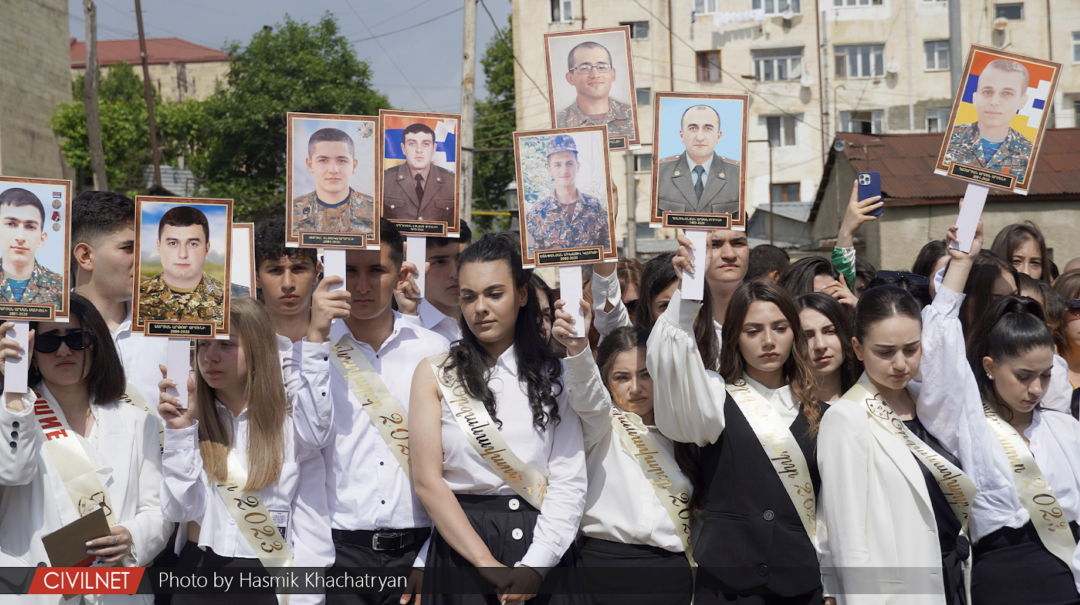
By Mane Berikyan
The right to education is often an early victim of conflict and unrest. For the 30,000 children living under blockade in Nagorno-Karabakh, this has been no exception.
As Azerbaijan's blockade of the Lachin corridor stretches past its sixth month, students in Nagorno-Karabakh applying to universities in Armenia and abroad are faced with uncertainty. The issue of their fast-approaching entrance exams is an immediate challenge for most students. However, longer-term questions of how — and if — they will be able to leave when their studies begin in September remain unanswered.
A BLOCKED ROAD TO THE FUTURE
Students in Nagorno-Karabakh applying to study in Armenia or abroad told CivilNet last week they are hopeful Stepanakert’s authorities can negotiate their safe passage to Armenia when the time comes, with the mediation of the International Committee of the Red Cross and Russian peacekeepers. However, recent developments around the blocked corridor may paint a bleaker picture for the future.
Last December, a group of self-proclaimed Azerbaijani environmental activists, many with known ties to the Azerbaijani government, began blocking the Lachin corridor, the only overland route connecting Nagorno-Karabakh to Armenia and the rest of the world.
In April, Azerbaijani border guards dramatically escalated the situation, illegally setting up a checkpoint on the corridor. Most Armenians refuse to cross the checkpoint, citing fears for their personal safety.
Azerbaijan’s blockade has caused severe shortages of energy, food, medicine, and other essentials throughout Nagorno-Karabakh. The Red Cross and Russian peacekeepers have been facilitating the occasional and limited transfer of humanitarian aid and persons across the blocked road.
Read More: Nagorno-Karabakh’s mothers grapple with scarce supplies for infants amid blockade
However, using the pretext of an earlier Azerbaijani provocation on the Lachin corridor that was thwarted by Armenia, Azerbaijan has effectively closed the checkpoint since last Thursday, blocking all humanitarian aid and movement by civilians, Russian peacekeepers and the Red Cross across the road.
Azerbaijan’s recent consolidation of its near-total humanitarian blockade creates additional obstacles to the pursuit of higher education for those seeking it outside of Nagorno-Karabakh.
"IT'S NOT FEAR THAT I FEEL BUT A SENSE OF INJUSTICE"
For many students, the blockade’s impact is felt not just on their futures but on their dreams. For Robert Melkumyan, a Stepanakert-based musician with bright career prospects, this is especially true.
After gaining acceptance to all three international universities he applied to, Melkumyan has decided to attend the University of South Wales to pursue a master’s degree in music. However, complications from the blockade and an unstable financial situation stand to jeopardize this.
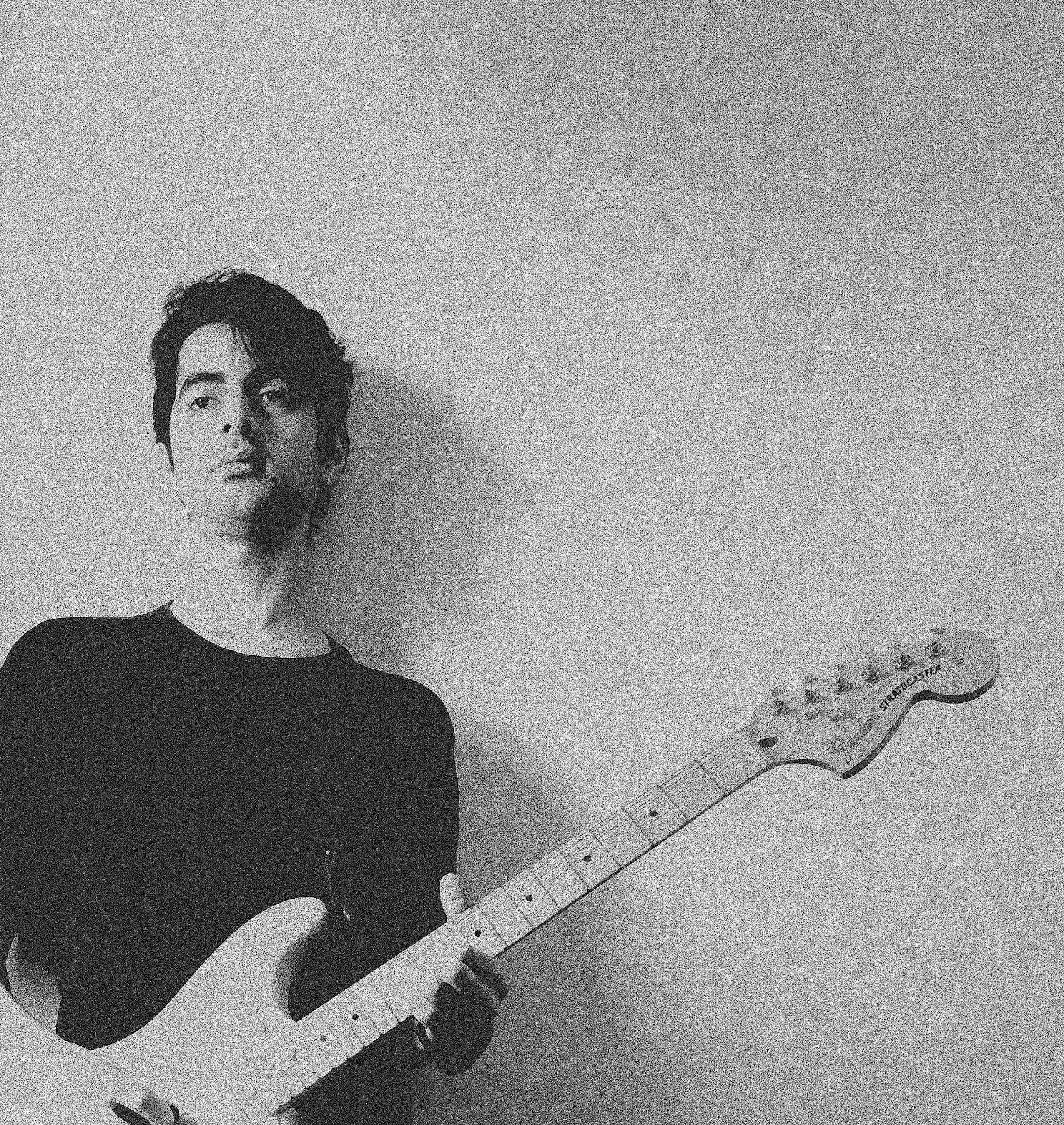
Melkumyan graduated from the Komitas State Conservatory in Yerevan in 2020. He returned to his hometown of Stepanakert, Nagorno-Karabakh, to work on his music, ultimately deciding to apply to universities abroad for better career prospects.
“It is not just about the education — of course, that is important, too — but it’s the networking with other musicians, the opportunities…it is much more possible to achieve your goals in a shorter amount of time than in Stepanakert,” said Melkumyan.
“Abroad, I can see myself taking my work and music farther ahead than here,” he added.
The university, he says, is aware of his situation. However, beyond offering flexibility, it appears there is little they can do to help. Melkumyan has started a GoFundMe campaign called “Beating the Blockade with Music” to raise awareness about the blockade and gather the funds necessary to finance his education in the United Kingdom. Although he says it is difficult to work on his music under the stressful conditions of the blockade, he continues to write, documenting his experiences through his art.
Like many others, he is uncertain what the future holds — or if, when the time comes to depart for Armenia and ultimately the United Kingdom, he will be able to access the road.
“Of course there is worry. Not just for my goals but for all our people, for those around [me], for [my] family, everything,” said Melkumyan.
“But when it comes to my goals, it’s not fear that I feel but a sense of injustice.”
A TWO-TIERED CRISIS
On May 26, Nagorno-Karabakh’s graduating twelfth graders gathered to mark their “Last bell” ceremony. Among the graduates was Ani Balayan, CivilNet’s youngest employee and the video editor for the CivilNet Artsakh field office.
527 students in Nagorno-Karabakh have decided to pursue higher education this year. Of those, approximately 200 are applying to universities in Armenia, in hopes of continuing their studies.
Several universities in Armenia have offered online versions of their entrance exams to remove physical barriers for applicants in Nagorno-Karabakh. However, 27 students must take in-person exams due to the nature of the programs they are applying to.
For these students, the question of entrance exams is the most immediate.
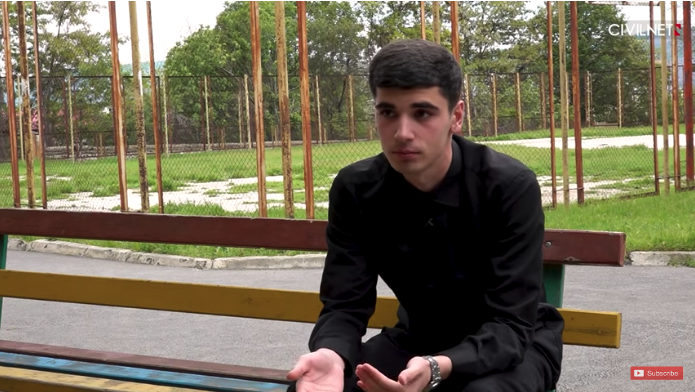
Vazgen Mkrtchyan, a twelfth grader in Nagorno-Karabakh applying to study at the Yerevan Theater and Film Institute amid blockade (CivilNet Photo/Hasmik Khachatryan)
Vazgen Mkrtchyan is a recent high school graduate in Nagorno-Karabakh. He is applying to the Yerevan Theater and Film Institute, where he is expected to take in-person entrance exams for his department, but is unsure what awaits him.
“My entrance exams will be held at the university, and now I am in a state of uncertainty,” said Mkrtchyan. “I don't know if I will be able to take my exams or not.”
Balayan is in a similar situation. Having just graduated from high school, she is applying to study photography in the Armenian State Pedagogical University, a degree not offered in Nagorno-Karabakh. Moreover, certain programs she hopes to apply to, such as Hetq’s journalism program for students, are offered exclusively in Armenia.
The entrance exams for Balayan’s major are supposed to be in-person, and are coming up soon in July. According to her, Nagorno-Karabakh’s Education Ministry is in contact with students, and is actively working to see if there is a possibility of online exams or the physical transfer of students to Armenia with third-party mediation by the Red Cross or Russian Peacekeepers. Students are supposed to hear back about the format of their exams by the end of June.
“There is still uncertainty,” said Balayan. “They might say, ‘we’re taking you, you’re not taking the exams online’... But it’s still not clear which one it will be.”
Authorities in Stepanakert say they, too, are uncertain about the circumstances in which students will take their university exams. However, according to Deputy Minister of Education Hasmik Minasyan, they are preparing for all possibilities.
“At the moment we cannot speak confidently about any one option, because, as you know, the situation is changing day by day, and the in-person university exams will begin after June 26,” Minasyan told CivilNet. “But until that day, we will have all the options developed so that our children are not deprived of that right.”
New escalations around Azerbaijan’s illegal checkpoint on the Lachin corridor now make such prospects blurrier.
Beyond the issue of entrance exams, a longer-term question lingers in the minds of many students. With September just around the corner, will they be able to leave Nagorno-Karabakh when classes begin? And if they do, will they be able to return to visit their families?
“The majority of our class also has to go to Armenia to study and they are as unsure as I am,” said Mkrtchyan.
“I’m going to take the [entrance] exams, pass, and if all that takes me [to Armenia], then it does,” said Balayan. “If not, then not.”
ON THE RIGHT TO EDUCATION
Though often overlooked, the right to education is one of the most precarious in times of conflict. As such, efforts to uphold it become outsized in importance.
Nagorno-Karabakh is a region unique for its civil society presence amid a sea of autocracy. However, Azerbaijan’s blockade has thrust even grassroots education initiatives into uncertainty.
The Hidden Road Initiative is just one out of many educational NGOs operating in the region. According to its director, Nanor Balabanian, all of the twelfth graders participating in her organization’s programming are currently in the process of applying to universities outside of Nagorno-Karabakh.
“They have no idea what they’re going to do, and we have no idea how to support them,” Balabanian told CivilNet.
When Azerbaijan’s blockade began, kindergartens and schools were among the first institutions to be shut down due to gas supply cuts and shortages, depriving students across dozens of schools of the right to education. Since then, the operations of nearly every educational institution in Nagorno-Karabakh, including NGOs with branches in Stepanakert and across the region, have been deeply disturbed by the blockade.
Moreover, the quickly escalating energy crisis caused by Azerbaijan’s blockade and subsequent rolling blackouts creates additional obstacles, especially when it comes to online education — an option being considered as a last resort for students if they are unable to leave in September.
“The situation in Sarsang [water reservoir] is increasingly worsening, and it is possible that there will be no [electricity] for hours,” said Balayan. “In that case, there will be a huge catastrophe.”
For now, however, a single blocked road has thrown the future of Nagorno-Karabakh’s youth into uncertainty.


 Stories