Russia urges Armenia and Azerbaijan to swiftly pursue ‘peace treaty’
 Civilnet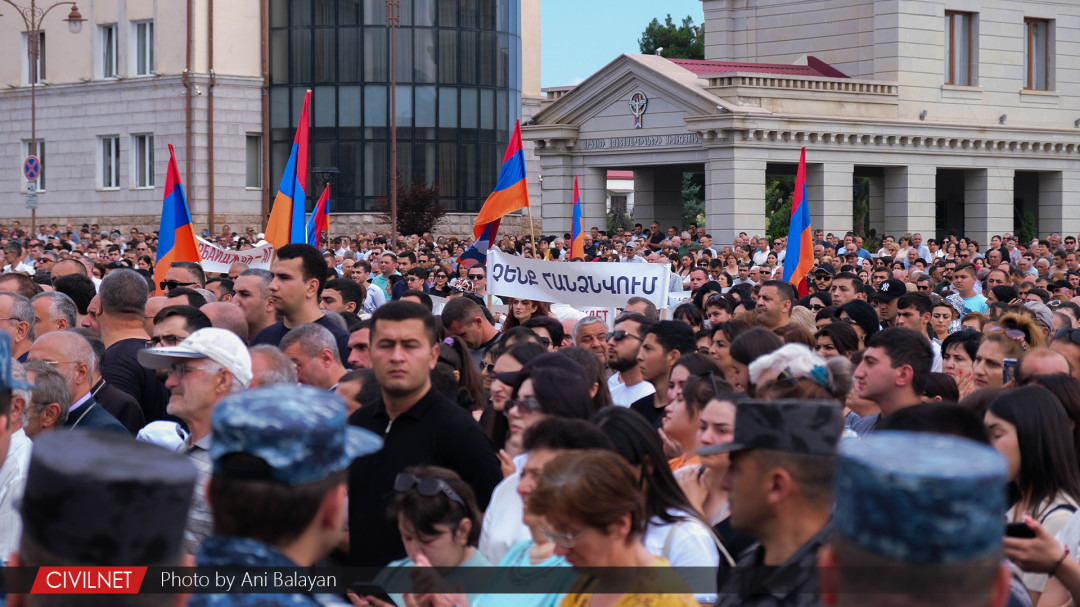
By Syuzanna Petrosyan
Russia’s Ministry of Foreign Affairs issued a statement on Saturday urging "not to burden third countries with the responsibility for the fate of Karabakh’s Armenian population." The statement emphasized the need for an urgent peace treaty between Baku and Yerevan.
"At the summits held under the auspices of the European Union in October 2022 and May 2023, Armenia recognized Nagorno-Karabakh as part of Azerbaijan’s territory. We respect the sovereign decision of the leadership of Armenia, but it has radically altered the fundamental conditions under which the leaders of Russia, Azerbaijan and Armenia signed the November 9, 2020 statement. It has also changed the situation for the Russian peacekeeping troops stationed in the region.”
“We believe that under these conditions, the responsibility for the fate of the Armenian population of Karabakh should not be placed on third countries. The preparation of a peace treaty between Baku and Yerevan should begin immediately, based on the agreements reached earlier,” the statement reads.
On Friday, more than 10,000 people, including senior officials, took to the streets in Artsakh (Nagorno Karabakh) to begin what they are calling a “popular movement” to end the blockade.
During the demonstration, State Minister Gurgen Nersisyan directed a message to the international community, Armenia, and Russia, questioning their inaction: “What do you need, what are you waiting for? Do you want us to have dead bodies on this square to make you respond?”
In its statement, the Russian Foreign Ministry notes that guarantees for the rights and security of Karabakh Armenian should be an integral component of the agreement. Additionally, it emphasizes the necessity of unblocking transportation infrastructure and demarcating the Armenian-Azerbaijani border.
“Considering the above, the Russian side reaffirms its willingness to actively contribute to the efforts of the international community aimed at restoring the normal life of Nagorno-Karabakh. We are ready to organize a tripartite meeting of foreign ministers in Moscow in the near future,” says the statement.
Moscow claims it is concerned about the current situation in Nagorno Karabakh and the deepening humanitarian crisis that has resulted from shortages of essential goods.
It calls on Azerbaijan “to take urgent measures for the immediate unblocking of the Lachin Corridor, to resume the free movement of citizens, vehicles and cargo in both directions, as well as for the energy supply of the region.”
Today, a three-hour meeting between the Prime Minister of Armenia Nikol Pashinyan and Azerbaijan’s President Ilham Aliyev took place in Brussels, with the mediation of the President of the European Council, Charles Michel.
At the meeting, Pashinyan handed over a letter written by Artsakh President Arayik Harutyunyan to Michel.
On the same day, more than 470 European non-governmental organizations and associations wrote a joint letter to the leaders of the European Union and the Council of Europe. The letter urges them to “take immediate and effective measures to end the ongoing illegal blockade of Artsakh by Azerbaijan.”
“In the name of respect for human rights, the values that European democracies claim to stand for, in the name of the sovereign right of peoples to self-determination and as citizens contributing to the prosperity and influence of the European Union who are concerned about its future, we solemnly ask you to act without delay,” the letter reads.
The European organizations name six actions that Europe can take to ease the situation in Karabakh, including implementing economic and politcal sanctions on Baku, as well as a humanitarian air corridor to aid Artsakh.
Last week, Azerbaijan’s blockade of Karabakh reached seven months, leaving the region’s roughly 120,000 Armenians grappling with severe shortages of food, medicine, and other essentials.
Now in full isolation, without aid from Russian peacekeepers or the International Red Cross, Karabakh Armenians are left in an unfolding humanitarian crisis that could result in extreme levels of malnutrition and starvation.


 Stories