Armenian Jazz: a way ‘to rejoice and to grieve’
 Civilnet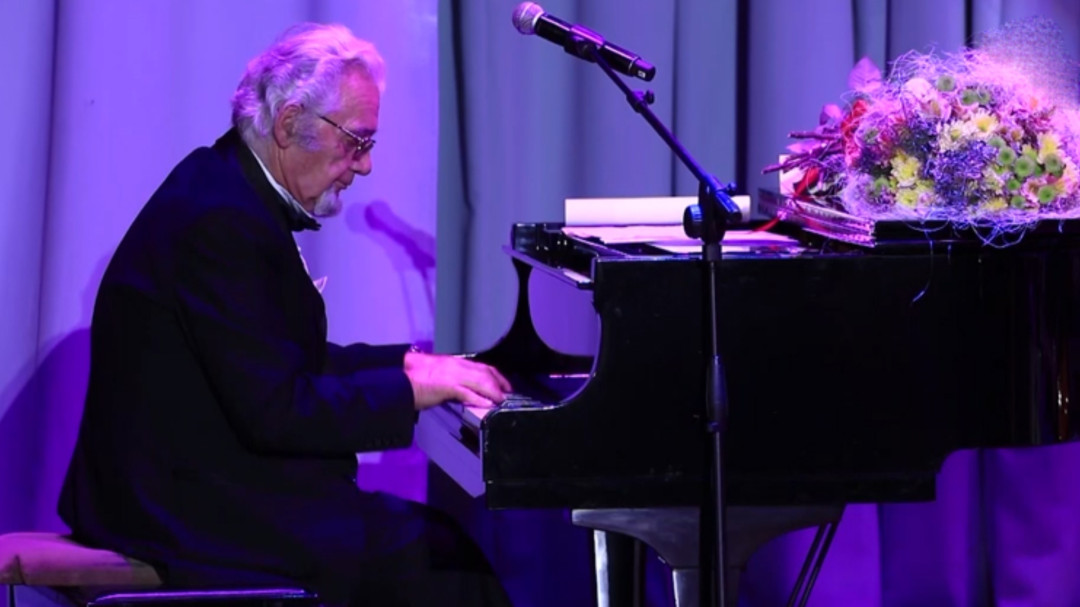
By Martha Gathercole
"Are you just familiar with jazz, or do you know jazz?" Armenian Jazz legend Martin Vardazaryan asked, turning the interview on me. I hadn't expected to be quizzed on my jazz knowledge. I decided to play it safe and say that I was only familiar with it.
As a newcomer to Armenia, I was simultaneously surprised by both the thriving, dynamic presence of Armenian jazz but also the severe lack of information about it as an established sub-genre. I decided to interview eighty-seven year old Martin Vardazaryan, a crucial pioneer throughout the history of Armenian jazz, to find out more about what sets it apart and why it is so important to Armenian people.
Martin began by telling me the story of how Armenian jazz was part of his life from his early youth.
“A band was put together: 'House of builders of the future', and there the Jazz orchestra was born. My father conducted it with Alexander Arutsinyan.”
He describes the culture of orchestras that was prevalent in the Soviet Union.
“Any self-respecting institution had its own orchestra. These independent orchestras went to an 'Olympiad'. They played both western and Armenian music. So Armenian jazz has its own form, had its own direction”.
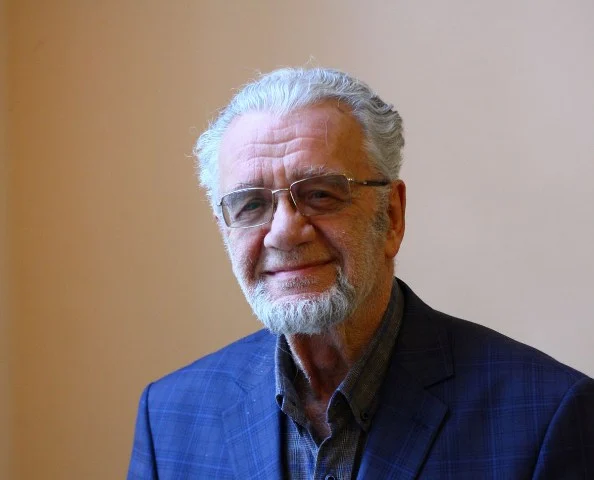
Martin continued to reflect glowingly on the different places that their jazz orchestras took them. He recounted that at a jazz competition in Czechoslovakia, “after our first concert people came up to me and said, ‘we were told that jazz is banned in the Soviet Union.’ I said that we're told to play the jazz so well that people don't realise that it is banned. In fact, in Armenia, jazz was never banned.” It seems that Soviet culture inadvertently fostered a culture of collaboration in state orchestras that brought Armenia's best musical minds together to develop a new and entirely unique genre of jazz: Armenian jazz.
But when I wanted to get to the bottom of how this Armenian jazz style was unique, I received a response in song:
What you hear above is a typical traditional Armenian melody.
How Babajanyan interpreted the Armenian melody into the style of Swing music, in a concert in Slovakia. He played the tune on the Duduk, a traditional Armenian instrument. This is the melody combined now with a jazz beat.
Martin used this traditional Armenian theme in a Soviet film, with a jazz twist.
But it's not only the melodies that make Armenian melodies unique: 'Have you ever heard the Duduk?', Martin asked me. He went on to explain that this was a traditional Armenian instrument that had been introduced into Armenian jazz along with the Zurna with its sharp sound, and the Blul, which he described as a 'perpendicular flute'. Arno Babajanyan played a version of Swing music using the Blul in a concert in Slovakia. These Armenian instruments, in addition to its melodies, gave Armenian jazz “'a new colouring” Martin put it.
Martin went on to explain why this unlikely but happy marriage between jazz and traditional Armenian music works so well: ''Armenian music has a rich rhythm system; we have 5/4, 7/4 and 9/4 rhythms. There is rhythmic diversity, but also rhythmic consistency. But improvisation is so important. The melodies and harmonies depend on the arranger and composer; the artistic invention is not the main thing. You need to find not just the theme, but also how to dress up the theme, so that people can see it more clearly.''
Martin named a fascinating pioneer of this: Artashes Kartalyan, who played national songs, dances, and folklore, but in a jazz way, with a constant rhythm, and with harmonies following jazz ratios.
For Armenians, as for all lovers of jazz, it is not simply a technical category of music. Martin classified it as “a human language of communication”. When asked what jazz means to the Armenian people, he responded succinctly: “It means both to rejoice and to grieve, to dance and to listen."
When I asked Martin how jazz was a way to grieve, he explained: "I'll say this: during the war, the Ayvazyan's Jazz orchestra played on the front lines. Not just behind the lines, but on the front lines. When a bit of land would be liberated, they would be playing with the enemy right there.”
For Martin, Jazz, above other genres of music, is important for dealing with hardship because "the language of the harmonies is richer. In jazz, there's everything: rhythmic syncopation, melodic shifting of 8s, accentuation of weak intervals. It is a human language of communication.”
Just as jazz originally developed in African-American communities as a coping mechanism for suffering and an outlet for their local rhythms and melodies, it seems that even on the other side of the world, Armenians have similarly developed a unique style out of both musical diversity and hardship. Combining their own familiar melodies, rhythms and instruments with jazz styles such as Dixieland and Swing, Armenia has made its very own dialect of this global language which overcomes linguistic and cultural barriers. Speaking to universal experiences of joy and sorrow, Armenian jazz communicates it in its own way, differently from the African-American pioneers of jazz in style, but united by the transcendent human ability to make a masterpiece from mourning.
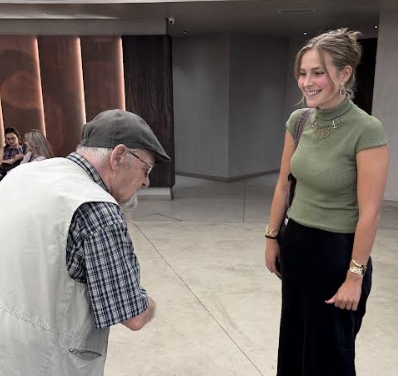
Martin Vardazaryan cracks a joke, saying ‘au reservoir’ instead of ‘au revoir', and then tells me another french phrase he remembers: ‘je reste toujours à votre disposition’ (I remain always at your service), and makes a final bow.
Also watch:


 Stories