 Civilnet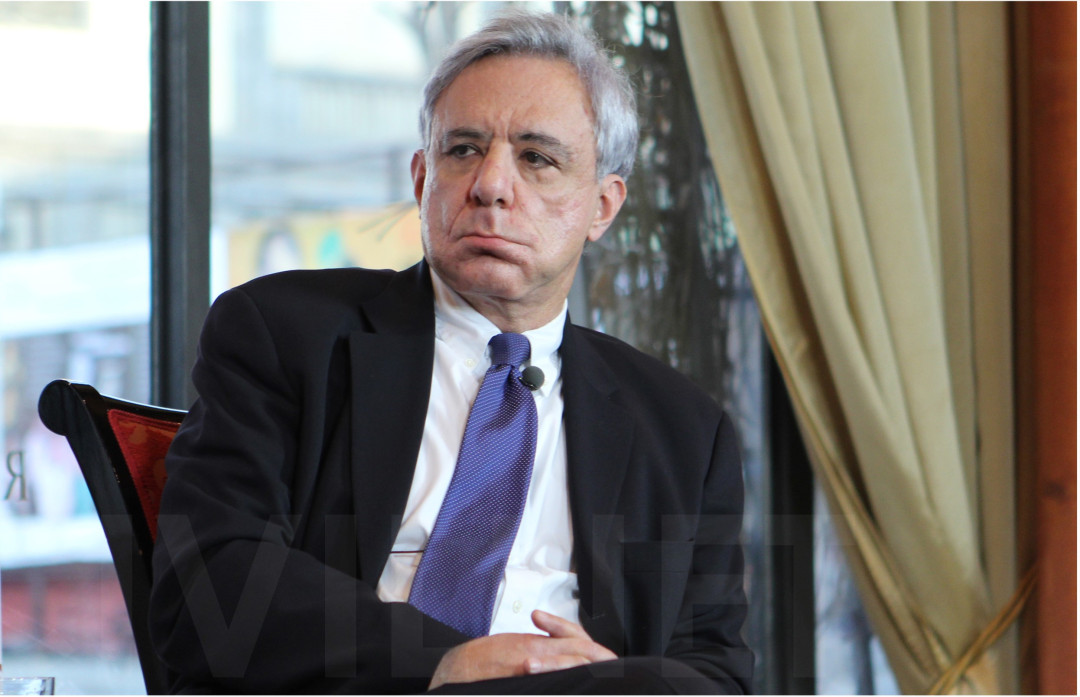
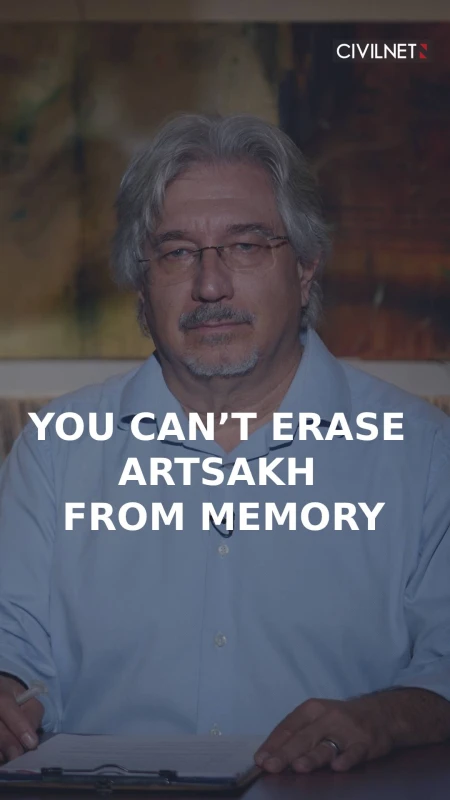
Op-ed by Vartan Oskanian, Armenia’s former foreign minister (1998-2008)
In an interview with Berliner Zeitung, Hikmet Hajiyev, foreign policy advisor to President Ilham Aliyev, called for constitutional changes in Armenia to prevent any future public discussion of Nagorno-Karabakh, dismissing such discourse as “revanchist.” In effect, the Azerbaijani government is demanding that Armenians not only forget their own history but also legally silence themselves from ever raising the issue again. Hajiyev also claimed that Armenians left Nagorno-Karabakh voluntarily, asserting that “Azerbaijan developed a fairly comprehensive reintegration program, but it was rejected by the Armenians.”
At the same time, the state-aligned Azernews launched a vitriolic attack on the Armenian diaspora and U.S. lawmakers who support the right of return for the forcibly displaced people of Nagorno-Karabakh. (https://www.azernews.az/analysis/245140.html). The article not only derides this right as “separatism” but portrays diaspora engagement as part of a sinister conspiracy to destabilize the region and obstruct the so-called peace process.
But Baku is deeply misreading the reality it faces—and engaging in profound hypocrisy.
First, Hajiyev’s account is disingenuous. The Armenians of Nagorno-Karabakh did not leave voluntarily. They were forcibly displaced following a nine-month blockade that cut off food, medicine, and energy, and after enduring three military assaults—culminating in the September 2023 offensive that left them no choice but to flee en masse. These events are not matters of interpretation; they are recent, well-documented, and indisputable.
Second, the claim that a “fairly comprehensive reintegration plan” was rejected ignores a fundamental truth: no such plan was ever presented in good faith. Any so-called proposals were issued under conditions of siege, violence, and the total collapse of security guarantees. The Armenians of Nagorno-Karabakh were never given the time, space, or safety to genuinely consider any arrangement. Offers made under duress are neither credible nor legitimate.
As someone who sat across the table from both Presidents Heydar and Ilham Aliyev, I witnessed firsthand the framework of negotiations that shaped peace talks for over two decades. When Armenians exercised full control over Nagorno-Karabakh, the right of return for displaced Azerbaijanis was always on the agenda—recognized as legitimate, essential, and non-negotiable by the Azerbaijani side.
Equally important: both Aliyevs, father and son, tacitly acknowledged Nagorno-Karabakh as an Armenian territory. While citing constitutional constraints that prevented formal recognition, they repeatedly offered the highest levels of autonomy that could possibly be envisioned. Their negotiating position reflected an understanding of the need for self-rule and legal safeguards for the Armenian population—principles they now deride as “revanchist.”
Third, the very term “reintegration” used by Hajiev, is striking. The prefix “re-” implies a return to a prior condition—specifically, the Soviet era when Nagorno-Karabakh held autonomous self-governance. If that is the reference point Azerbaijan invokes, then any credible “reintegration” must reflect the region’s long history of autonomy and cultural identity—not its erasure.
Now that the balance of power has shifted and Azerbaijan controls Nagorno-Karabakh, Baku has abruptly reversed its own long-held positions. Discussions of autonomy, return and rights—once considered legitimate—are now dismissed as threats to peace. What was acceptable for Azerbaijanis is now deemed unacceptable for Armenians.
The right of return is not a fantasy concocted by lobbyists. It is not the fixation of 87 U.S. legislators, nor the rhetoric of a so-called “revanchist” elite. It is the deeply rooted conviction of a people forcibly expelled from their ancestral homeland—many for the second time in thirty years. This right is grounded in international law, affirmed by universal human rights norms, and etched into the memory and identity of every Armenian family affected by the ethnic cleansing of 2023. It will not vanish because Azerbaijan deems it inconvenient, nor because Baku officials wish it away.
If Azerbaijan is serious about peaceful coexistence, it should accept the offer of neutral platforms—such as the Swiss peace initiative for Nagorno-Karabakh, mandated by both houses of the Swiss Parliament. Let Azerbaijan bring its so-called reintegration plan back to the table—this time, across from the legitimate representatives of the displaced population—not by speaking over them, but by engaging with them.



 Stories