Who’s who in the Armenia-Azerbaijan ‘civil society members’ event?
 Civilnet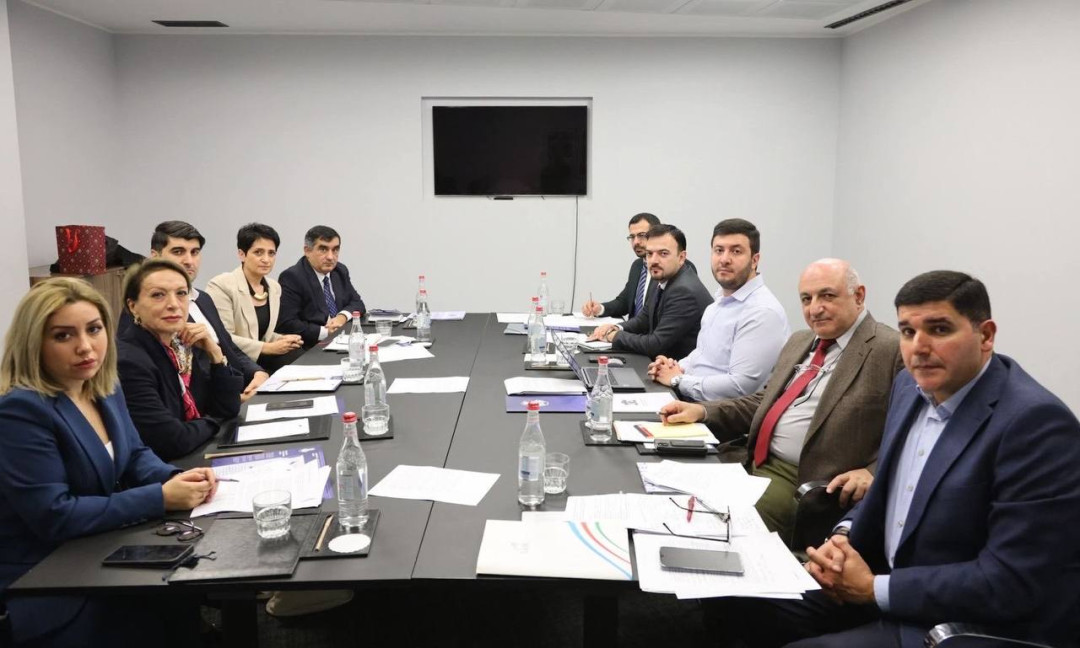
By Alexander Pracht
A roundtable discussion between Armenian and Azerbaijani experts took place in Yerevan on Tuesday, organized by the local NGO Research Center on Security Policy. In its official readout, the organization stated that the event was held “with the support of the official structures of both countries.”
In their statement, the organizers described the attendees both as “representatives from the expert communities of Armenia and Azerbaijan” and as “representatives of the civil societies of Armenia and Azerbaijan.” The discussion, they said, focused on peacebuilding and confidence-building measures, humanitarian concerns, and potential economic and logistical cooperation. Armen Grigoryan, Armenia’s Security Council chairman and former foreign minister, also attended the event.
The event was described as historic by media in both Armenia and Azerbaijan, as it marked the first time in decades that Azerbaijani representatives, though not government officials, arrived in Yerevan on a direct flight from Baku. It followed the August peace summit at the White House, where Armenian Prime Minister Nikol Pashinyan and Azerbaijani President Ilham Aliyev signed a declaration of peace intention, placing their initials on a draft normalization agreement that remains unsigned. As part of ongoing confidence-building measures, Yerevan sent a delegation led by the National Security Service chief to Baku last month to participate in a regional security forum.
Interestingly, the participants were seated in a mixed arrangement rather than on opposite sides of the table, as is usually the case at such meetings. As seen in the photo above, this format appeared designed to emphasize informality and dialogue. Below, we take a closer look at who was who at the table—and why describing the Azerbaijani participants as “members of civil society” raises serious questions.
On the left-hand side of the table, from left to right:
- Kamala Mammadova, the chief editor of 1News Az, an online publication publishing in Azerbaijani and Russian. The outlet’s tone is distinctly pro-government, which is hardly unexpected given that Azerbaijan ranks 167th out of 180 countries in the 2025 Press Freedom Index by Reporters Without Borders, the global NGO advocating for freedom of information.
- Dilara Afandiyeva, often referred to as the head of an ambiguous organization called the Center for the Protection of Women’s Rights of the Azerbaijani Society. In Armenia, however, she is known for something entirely different. Afandiyeva was an active participant in the blockade of Nagorno-Karabakh that began in the Lachin Corridor in December 2022. The blockade, staged by so-called Azerbaijani “eco-activists” who claimed to protest alleged environmental violations by Armenians in the region, resulted in a severe humanitarian crisis and shortages of essential goods, ultimately culminating in the ethnic cleansing and abandonment of Karabakh by its Armenian population in September 2023.
- Narek Minasyan, an expert at the RCSP, the think tank that organized the event. On his LinkedIn page, Minasyan describes himself as an expert in international politics and also serves as the chief editor for international news at the state-funded TV Channel 1.
- Naira Sultanyan, the director of the Democracy Development Foundation and an adviser on Armenian political, peace, and development issues.
- Ramil Iskandarli, a lawyer and legal counsel who chairs the Azerbaijan National NGO Forum.
Right-hand side, from left to right:
- Samvel Meliksetyan, also an expert at the RCSP, a historian and commentator on a wide range of topics.
- Rusif Huseynov, co-founder and director of the Topchubashov Center, a Baku-based think tank.
- Areg Kochinyan, the president of RCSP, who effectively chaired the event.
- Boris Navasardian, the honorary president of the Yerevan Press Club, an association of Armenian journalists, and a veteran political commentator.
- Farhad Mammadov, affiliated with the Center for Strategic Studies under the President of Azerbaijan.
Reports on the event sparked criticism among Armenia’s general public, largely over the characterization of the Azerbaijani attendees as “members of civil society.” Many pointed out that Azerbaijan’s long-standing crackdown on independent media and civic organizations has left little room for genuinely independent experts or journalists, with numerous activists and reporters currently imprisoned.
Afandiyeva’s inclusion drew the harshest criticism, with some commentators suggesting that her presence amounted to an “open mockery” of Armenia.
Location

 Stories