 Civilnet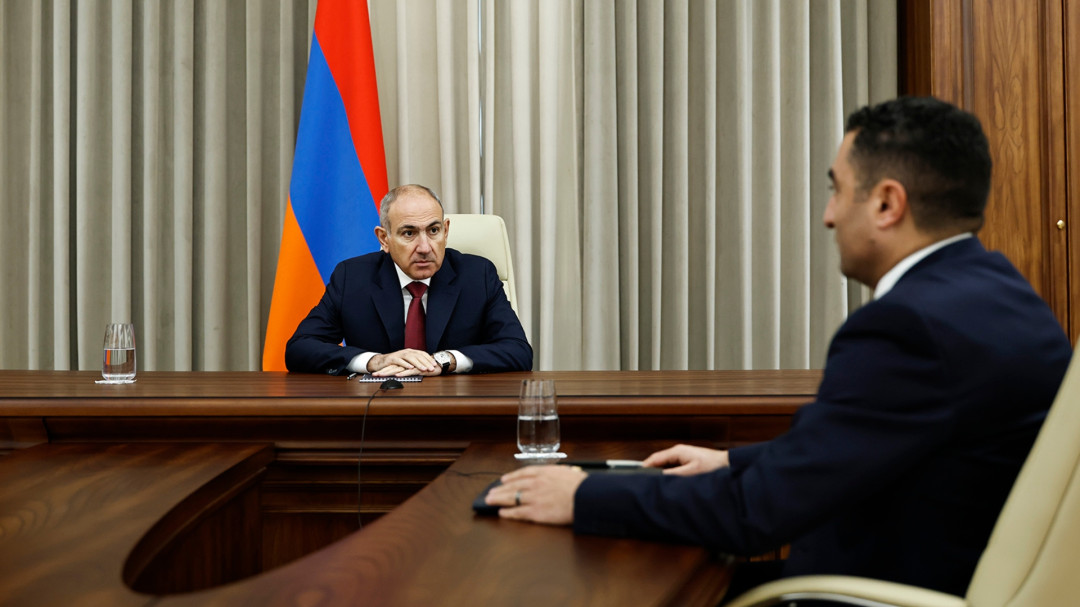
By Siranush Adamyan
Armenian Prime Minister Nikol Pashinyan said on Tuesday that the government is considering two possible scenarios for the future management of the Electricity Networks of Armenia (ENA), days after parliament approved legislation enabling the state to take control of the utility.
Speaking during a meeting with Romanos Petrosyan, the state-appointed temporary administrator of ENA, Pashinyan said the government’s immediate task was to assume operational control of the distributor. “Our goal at this stage is to take over ENA’s management,” he said, adding that nationalization was not the only option on the table.
According to Pashinyan, the first scenario would see ENA administered directly by the government after its acquisition. The second would involve outsourcing management to an international operator through a competitive process. He said the government has already sent “signals” to major global utilities in partner countries, noting there could be interest from foreign companies.
Pashinyan stressed that any future operator must guarantee transparent oversight. “We must find the most effective manager, one that allows for both public and state supervision,” he said.
Petrosyan, who last week resigned as head of the State Oversight Service before being placed in charge of ENA, briefed Pashinyan on the situation inside the company following his takeover. According to the prime minister’s office, the temporary manager has started internal assessments of service quality, network reliability and procurement practices.
The government moved to nationalize ENA shortly after the June arrest of its owner, Russian-Armenian billionaire Samvel Karapetyan, triggering concerns about political motivation and the rule of law. Parliament rushed through a bill empowering the authorities to remove ENA’s management and impose state control without a court decision—legislation the opposition has since challenged in the Constitutional Court.
Karapetyan was detained after publicly backing Catholicos Karekin II amid Pashinyan’s escalating confrontation with the Armenian Apostolic Church. His family has already filed a notice of dispute under the Cyprus–Armenia bilateral investment treaty, signaling possible international arbitration. Experts warn that the seizure of ENA could expose Armenia to significant financial claims. Earlier in August, a Stockholm arbitration tribunal also ruled in favor of Karapetyan-linked companies in a separate dispute, further heightening concerns that Armenia could face additional liabilities.
Despite the political backdrop, Pashinyan on Tuesday insisted the government’s actions are driven by consumer protection and energy security. “We must defend the interests of electricity users,” he said.
Opposition lawmakers and prominent economists argue that the move risks damaging Armenia’s investment climate, already strained by a series of costly investor-state disputes in the mining, infrastructure, and utilities sectors.





 Stories