The Published Karabakh Negotiation Files: Facts vs. Political Spin
 Tigran Grigoryan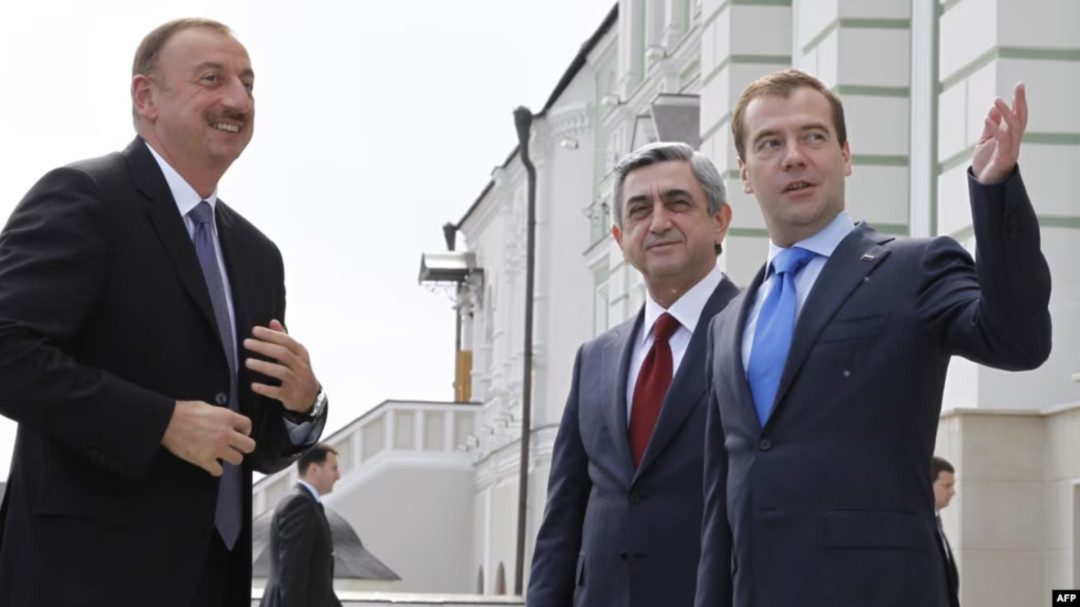
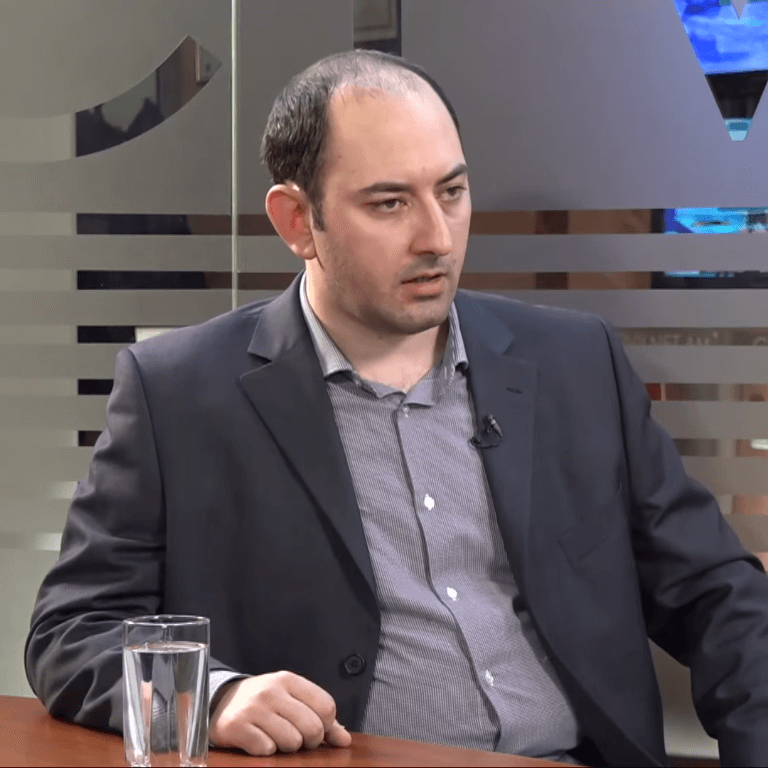
Tigran Grigoryan
On December 2, the website of the Government of Armenia published a number of documents related to the settlement of the Nagorno-Karabakh conflict. Some of these documents had long been published officially or unofficially, while others were made public in full for the first time. Their publication is the result of Nikol Pashinyan’s ongoing blame game with Armenia’s former presidents, who in recent years had been demanding that the content of pre–Second Karabakh War negotiations be made public. A few weeks ago, Pashinyan promised to do so after the official dissolution of the OSCE Minsk Group, which took place on December 1.
The list of published documents raises several questions. First, it is unclear why, alongside the co-chairs’ proposals from 2014, 2015, 2016 and 2019, the Government also published well-known publicly accessible documents such as the UN Security Council resolutions on the Karabakh conflict adopted in 1993, the final declaration of the 1994 OSCE Budapest Summit, and other similar texts.
A second question arising from the list concerns the logic behind selecting proposals from certain periods while omitting similar proposals from other periods. For example, it is interesting that the Government included in the list the document on the 1999 land-swap plan, which had been published years ago in Haykakan Zhamanak—a newspaper owned by the prime minister’s family—but did not publish the 2001 Key West negotiation proposal. Without that, the picture of the negotiation process of those years becomes distorted. (To understand the negotiations of those years, you may read Radio Liberty’s extensive report on the topic, as well as my article based on a declassified U.S. State Department document regarding a 2000 Clinton–Putin meeting.)
The documents included in the list—among them, for example, Serzh Sargsyan’s 2016 letter addressed to Vladimir Putin—suggest that, once again, this is not an attempt to inform the public but part of the ongoing pre-election effort to circulate the government’s preferred narratives.
From an analytical perspective, the proposals presented by the co-chairs in 2014, 2015, 2016, and 2019 are the most interesting documents in the list, because in recent years the main public debate on the negotiation process revolved around the provisions in these proposals. Although partial leaks had occurred—particularly from former co-chairs—and the logic and evolution of these proposals were broadly known to experts who follow the topic, their complete publication now makes it possible not only to verify earlier assumptions but also to examine in greater detail the changes in negotiation content and to respond with concrete facts to claims made in recent years.
If we compare the post-2014 proposals with the Kazan document, we can observe several differences that, to some extent, reflected the shifting power balance between Armenia and Azerbaijan.
Nagorno-Karabakh Status
One of the most significant changes concerned the provision on the final status of Nagorno-Karabakh. That status was to be determined by a popular vote held under UN or OSCE auspices, reflecting the free will of the population of Nagorno-Karabakh and carrying legally binding force in accordance with international law.
The 2011 Kazan document clearly defined what was meant by “population of Nagorno-Karabakh”:
“By ‘population of NK’ is meant persons of any ethnicity who lived in NK in 1988—in the same proportions as existed before the start of the conflict.”
This important clarification disappeared from all subsequent proposals, complicating any agreement on the criteria for implementing the popular vote.
Return of the 5+2 districts
The Kazan document proposed that, in the first stage, Armenia would return to Azerbaijan the five districts outside the former NKAO (Aghdam, Fizuli, Jabrayil, Zangilan and Kubatlu). The remaining two districts—Kelbajar and the non-corridor part of Lachin—would be returned gradually five years after the first stage, without being linked to any other issue.
In the later proposals, no timeline was provided for the return of these two districts; instead, the issue became interconnected with matters to be negotiated in the next stages—such as the width of the Lachin Corridor, the implementation of the vote on status, etc. This interdependence is clearly reflected in one of the proposed documents in 2019, a draft UN Security Council resolution prepared by the co-chairs.
Interim status
Another important set of changes after the 2011 Kazan meeting concerned the provision on the interim status of Nagorno-Karabakh.
In the Kazan document, this point was clearly formulated: the term “interim status” was explicitly used, and the rights and powers of Nagorno-Karabakh during this interim period were detailed—including forming its own democratically elected authorities, maintaining self-defense and law-enforcement forces, and obtaining observer status in the OSCE.
From August 2015 onward, the term “interim status” was no longer used in the proposals. The language describing Nagorno-Karabakh’s rights in this period became much more restrained—recognizing only the rights necessary for the full functioning of its population.
At the same time, a new format emerged: alongside the Armenian-Azerbaijani declaration on the first phase of settlement, the co-chairs put forward a separate document—their own statement on that declaration. The detailed provisions on Nagorno-Karabakh’s rights and powers during the interim period were placed in this co-chairs’ statement rather than in the bilateral declaration. In other words, Azerbaijan refused to agree to these provisions in the declaration but they were still recorded by the co-chairs. This arrangement remained in place until June 2016.
After the April 2016 war, in the June proposal a new formulation appeared: Nagorno-Karabakh would retain the rights it de facto had at the moment of signing the inter-state agreement, until the final status was determined. As before, the more extensive description of interim powers remained in the co-chairs’ statement.
The formulation about preserving Nagorno-Karabakh’s de facto rights, however, disappeared in the August 2016 draft Armenian-Azerbaijani declaration, where the more restrained earlier language reappeared. But at that stage a third document was added: a draft UN Security Council resolution prepared by the co-chairs. These three documents (the declaration, the co-chairs’ statement, and the UNSC draft) were also on the table in 2019.
In the UNSC draft, the UN Secretary-General was instructed to:
“In consultation with the Parties, the OSCE Minsk Group Co-Chairs, and the OSCE Secretary-General, prepare within one month and submit for Security Council approval proposals on the legal and practical modalities for implementing the arrangements set out in paragraph 1 of Article 6 of the Declaration and in Articles 4 and 5 of the Statement, concerning the rights ensuring the full functioning of the population of Nagorno-Karabakh, and decides that the totality of these rights shall be guaranteed for Nagorno-Karabakh's recognized status throughout the entire period until the final status is resolved through a comprehensive peace agreement.”
Nikol Pashinyan referred to this paragraph in his 2023 testimony before the parliamentary commission examining the circumstances of the 44-day war, concluding:
“This is, by the way, Azerbaijan’s long-standing wish—to transfer the status issue to the UN platform—which has always been the least desirable option for the Armenian side. Why? Because if the UNSC is to decide, then it must do so within the framework of its own past resolutions.”
But Pashinyan did not mention that Articles 4 and 5 of the co-chairs’ statement—which contained detailed provisions on Nagorno-Karabakh’s interim rights—were referred to in the UNSC draft as arrangements. Nor is it clear why the interim status criteria drafted by the co-chairs of the OSCE Minsk Group would be altered by the UN Security Council—three of whose five permanent members were themselves Minsk Group co-chair countries. Moreover, the UNSC draft resolution, as noted above, does not reference the 1993 UNSC resolutions on the conflict.
Another of Pashinyan’s claims on interim status is also directly contradicted by the published documents. In his testimony, he stated that Nagorno-Karabakh could have—and likely would have—become a jointly governed entity by Armenians and Azerbaijanis. However, in the government-published documents, there is no mention of the return of Azerbaijani refugees to the territory of the former NKAO during the first stage. Meanwhile, interim status would have been granted to Nagorno-Karabakh precisely in the first stage, lasting until the final status determination.
In sum, while it is undeniable that some elements of the negotiation content became less favorable for the Armenian side after the 2011 Kazan meeting, the government’s claims in recent years—that the documents on the table were catastrophic and left them no room for maneuver—are also false.
The 2019 proposals granted Nagorno-Karabakh a broad interim status, to be anchored in a UN Security Council resolution; maintained Armenian control over Kelbajar and Lachin; ensured that the five returned districts remained demilitarized; and reflected the international community’s de jure recognition of Armenia’s role in ensuring Nagorno-Karabakh’s security, among other points.
Questions about whether Azerbaijan would have agreed to this package—or would have adhered to it—are legitimate but secondary. What is primary is that the Armenian government avoided substantive negotiations on this package, giving Azerbaijan the opportunity to legitimize its future aggression. This is the key difference between the current government and all previous ones.



 Stories