 Civilnet
By Siranush Adamyan
Armenia’s efforts to secure a lasting peace agreement with Azerbaijan risk deepening domestic tensions as more than 100,000 refugees from Nagorno-Karabakh struggle to rebuild their lives, the International Crisis Group (ICG) says in a report released on Monday. The report is written by Joshua Kucera, Senior Analyst for the South Caucasus at ICG.
“If these tensions remain unaddressed, the displacement from Karabakh will remain an open wound in Armenian politics and society,” the report says, warning that Armenia’s difficulty in integrating displaced Karabakh Armenians “risks undermining the country’s efforts to unite society behind its push for a lasting peace with Baku.”
More than 100,000 ethnic Armenians fled Nagorno-Karabakh in 2023 after Azerbaijan launched a military offensive in September, following more than nine months of blockade, resulting in the ethnic cleansing of the enclave’s Armenian population.
The report says that Armenia initially managed the influx effectively, introducing rental and utility subsidies that enabled refugees to resettle. But those measures are later sharply reduced.
Monthly rental support of about $130 per person is curtailed in mid-2024 and largely ends in June, the report says. Assistance is now limited to around 45,000 refugees from vulnerable groups, such as pensioners, children, and people with disabilities, who receive roughly $80 per month. That programme is scheduled to end in early 2026.
“The rush to peace has left Karabakh refugees feeling abandoned – economically, politically and morally,” the report says, adding that unresolved grievances risk becoming “an open wound” in society.
Housing remains the most acute challenge. The Armenian government promotes a one-off home-purchase scheme offering between $8,000 and $13,000 per person. Still, the report says the amount is often insufficient, particularly near Yerevan, where employment opportunities are concentrated, and property prices are high.
Of some 25,000 families eligible for the programme, only 3,810 receive certificates to buy homes by mid-December, and just 1,631 families complete purchases, according to figures cited in the report.
As rental aid is cut, thousands of refugees begin leaving Armenia again, most often for Russia. Official statistics suggest around 16,000 refugees leave Armenia after 2023, while former Karabakh officials say the figure is “at least 24,000 and probably much higher,” the report says.
Beyond economic hardship, the report highlights what it describes as an increasingly hostile public climate toward Karabakh Armenians. Refugees “often say they feel unwelcome in Armenia,” while denigration of Karabakh Armenians becomes widespread enough to be described as “hate speech,” the report says.
It notes that pro-government figures and media outlets portray refugees as ungrateful, politically manipulated, or aligned with Armenia’s external adversaries, particularly after protests against aid cuts. Following those demonstrations, official rhetoric reaches a point where Armenia’s human rights ombudsman warns that “hate speech and discrimination must be eliminated from public discourse.”
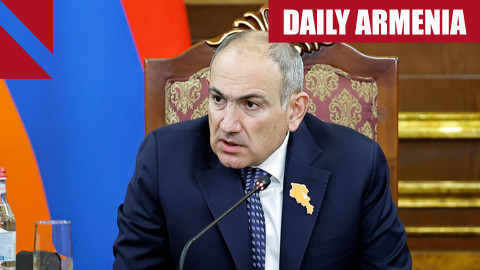
Politically, the report situates the refugee issue within Armenia’s broader peace effort. Prime Minister Nikol Pashinyan renounces any Armenian claim to Nagorno-Karabakh and avoids raising issues related to refugee return, property rights, or cultural heritage during negotiations.
The report says Armenia finalises the text of a peace agreement with Azerbaijan, though it remains unsigned, and that the two sides begin work on reopening transport routes with U.S. support.
But it says the handling of the refugee issue “intensifies political insecurities among the ruling elite,” who fear that displaced Karabakh Armenians “might mobilise politically to demand rights or recourse for the loss of their homeland.”
While refugees are unlikely to become a decisive political force ahead of Armenia’s 2026 parliamentary elections, the report says their marginalisation risks fuelling broader dissatisfaction and deepening polarisation.
ICG says the Armenian government and its allies should “step back from what has become a hostile and defensive approach toward the refugees” and instead “articulate a positive vision” for their integration. It adds that international partners could encourage better relations by continuing to fund and support refugee integration and by discouraging discriminatory rhetoric.
At the same time, the report says refugees and their advocates need to accept that a return to Nagorno-Karabakh under the conditions they demand is “not realistic,” given Azerbaijan’s firm control of the territory and rejection of any international security presence.
Without stronger efforts to integrate refugees economically, politically, and socially, the report concludes, the displacement risks becoming “an unhealed wound,” even as Armenia seeks to turn the page on decades of conflict.


 Stories