2025: A Year of Democratic Backsliding in Armenia
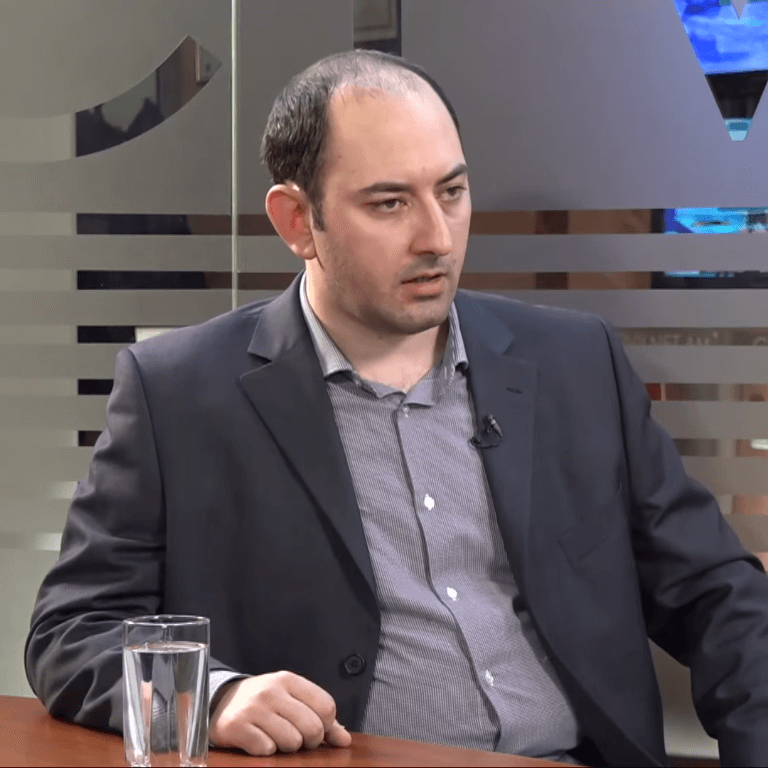 Tigran Grigoryan
By Tigran Grigoryan
The year 2025 proved to be deeply troubling for Armenia’s democratic development. Over the course of the year, a series of negative developments and entrenched trends cast serious doubt on the prospects for democratic consolidation in the country. Equally alarming were the growing questions about society’s capacity to resist increasingly overt anti-democratic practices.
Throughout 2025, Democracy Watch consistently sought to draw attention to these developments. Taken together, the evidence allows for a clear and sobering conclusion: 2025 was a year of democratic backsliding for Armenia.
One of the most consequential shifts of the year was the completed transformation of Armenia’s ruling party. The political force that came to power in 2018 on the wave of the Velvet Revolution, promising democratic reforms and a break with post-Soviet governance practices, has now fully evolved into a classic post-Soviet administrative resource party. The dominant feature of 2025 was the systematic use of state resources, law enforcement bodies, and the judicial system by the ruling party for domestic political purposes.
The most problematic manifestations of this trend included illegal wiretapping, the use of intimate or personal material for blackmail, and the public release of such materials when blackmail failed to achieve its intended effect. Equally concerning were high-profile and politically sensitive criminal cases in which evidence was falsified by law enforcement agencies, followed by a complete absence of consequences even after such misconduct was exposed. This pattern reinforced a sense of impunity, as well as growing public indifference toward obvious abuses of power.
Another defining feature of 2025 was the initiation of criminal cases on political grounds and the selective application of justice for domestic political ends. Rather than serving as an impartial arbiter, the justice system increasingly appeared to function as a tool for managing political competition and disciplining dissent. Many independent human rights defenders now point to the existence of political prisoners in Armenia.
Institutionally, the year continued to be marked by the disproportionate strengthening of executive power at the expense of other branches of government. Parallel to this, there was a further consolidation of a personalist style of governance centered on Prime Minister Nikol Pashinyan, culminating in his statement, “I am the government.” The growing personalization of power was accompanied by the frequent use of unacceptable, and at times obscene, language by the prime minister. Over time, this rhetoric became normalized in public discourse, lowering standards of political communication and contributing to a broader degradation of democratic culture.
The targeting of vulnerable groups also became more pronounced in 2025. Nagorno-Karabakh refugees were increasingly singled out by ruling party officials and media outlets affiliated with them, often portrayed as political or security threats, alien elements, or pawns in external hands. Such rhetoric not only stigmatized an already vulnerable population but also contradicted fundamental democratic and humanitarian principles.
Independent media also faced mounting pressure. High-ranking government officials increasingly used legal and rhetorical means to attack the few independent outlets remaining in Armenia’s highly polarized media landscape. This was particularly evident in the ongoing legal proceedings concerning Yerevan Mayor Tigran Avinyan’s lawsuit against CivilNet, as well as sustained verbal attacks by multiple senior officials against Azatutyun, RFE/RL’s Armenian service. In parallel, Armenian Public Television—the country’s largest media outlet, funded by taxpayers—continued to function as a government mouthpiece and remained heavily involved in domestic political propaganda. This, too, reflects the post-Soviet governance model based on the use of administrative resources described above.
One of the most troubling trends of the year was the continued instrumentalization of concepts such as sovereignty protection and resistance to hybrid threats. While these concerns are real and legitimate in Armenia’s security environment, in 2025, they were increasingly invoked to justify anti-democratic and unconstitutional measures. This framing blurred the line between genuine national security needs and the consolidation of unchecked power, allowing democratic erosion to be presented as a necessary trade-off for stability. Such tactics are a well-documented feature of democratic decline, whereby ruling elites justify abuses of power by appealing to higher goals.
Perhaps one of the most fundamental problems facing Armenia today is the absence of a viable democratic alternative to a ruling party that is becoming increasingly authoritarian. The parliamentary opposition has failed to distance itself from its past or to genuinely reset its political agenda. Moreover, its de facto leaders have openly threatened crackdowns on civil society and independent media in the event of a return to power.
Most troubling, however, is the absence of active societal resistance to these developments. Armenian society, still marked by political apathy and escapism, has failed to respond forcefully to the encroachment on the rule of law and democratic practices by the ruling party. Even more concerning is the growing fragmentation of civil society itself. Parts of it now either tacitly support or openly justify the government’s consolidation of power, abuse of state institutions, and other anti-democratic practices in the name of higher objectives.
This is among the clearest symptoms of democratic corrosion. There is broad academic consensus that only sustained, everyday resistance by independent societal actors can prevent the executive from accumulating unchecked power and avert democratic collapse. At present, this prerequisite appears largely absent in Armenia, significantly endangering the country’s prospects for democratic success.
Democracy Watch is a joint initiative of CivilNet and the Regional Center for Democracy and Security.

 Stories